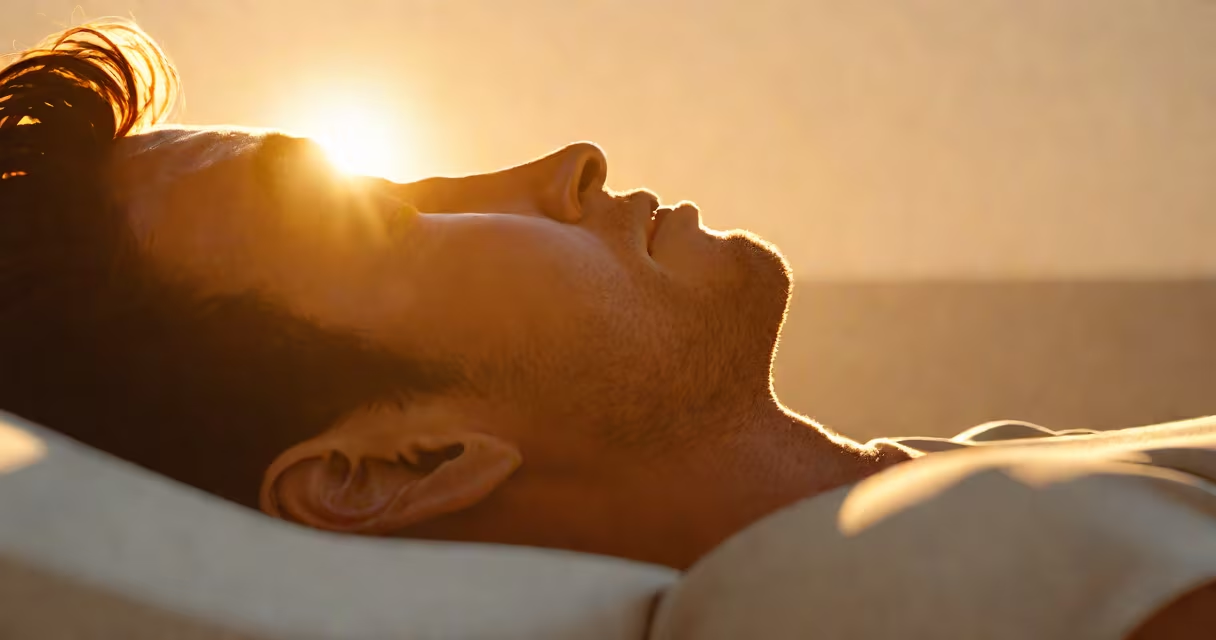
The sun can make you sleepy by altering your body's production of melatonin, the hormone that regulates sleep. This happens through its effects on your circadian rhythm, the internal clock that governs your sleep-wake cycle.
Sunlight exposure influences your circadian rhythm by signaling to your brain that it's time to wake up or wind down. In the morning, sunlight suppresses melatonin production, helping you feel alert. However, excessive sunlight exposure later in the day can delay melatonin release, making it harder to fall asleep at night.
Not all sunlight is equal in its impact on sleep. Blue light, which is abundant in sunlight, has the strongest effect on melatonin suppression. Here's how different types of light compare:
| Light Type | Effect on Melatonin | Typical Source |
|---|---|---|
| Blue Light | Strong suppression | Sunlight, screens |
| Green Light | Moderate suppression | Sunlight, LEDs |
| Red Light | Minimal suppression | Sunset, incandescent bulbs |
Many people believe that sunlight always makes you more alert. While morning sunlight can boost alertness, excessive exposure in the evening can have the opposite effect. A study published in the journal Sleep found that evening sunlight exposure can delay sleep onset by up to an hour.
I once spent a weekend camping without electronic devices. The natural sunlight exposure during the day made me feel energized, but by 9 PM, I was yawning and ready for bed-despite usually staying up much later at home. This experience highlighted how useful sunlight can be in regulating sleep patterns.
For those looking to improve their diet for sleep, incorporating carbohydrates that make you sleepy can also support your body's natural rhythms. By combining smart sunlight exposure with a sleep-friendly diet, you can improve your sleep quality and feel more rested.