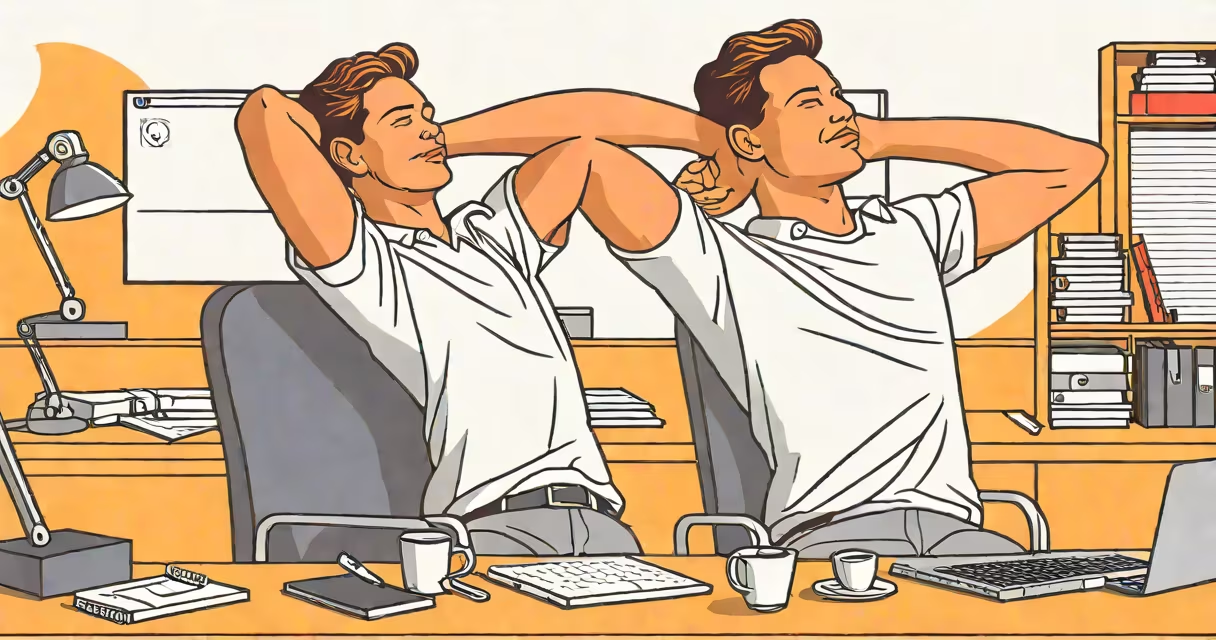
Stiffness in the body occurs when muscles, joints, or tendons lose their normal flexibility, often due to inactivity, injury, or aging. It can affect any part of the body but commonly targets the neck, shoulders, and lower back.
Stiffness happens when tissues tighten or lose lubrication. Muscles stiffen after prolonged inactivity because they aren't receiving regular blood flow. Joints may stiffen due to a decrease in synovial fluid, which normally cushions and lubricates joints. Tendons and ligaments can also tighten from overuse or repetitive motions.
Stiffness falls into three main categories:
Several factors contribute to body stiffness:
| Cause | Description |
|---|---|
| Inactivity | Sitting or standing for long periods without movement. |
| Aging | Natural wear and tear on joints and muscles over time. |
| Dehydration | Lack of water reduces muscle elasticity and joint lubrication. |
| Injury | Sprains, strains, or fractures can lead to lingering stiffness. |
| Chronic conditions | Arthritis, fibromyalgia, or lupus can cause persistent stiffness. |
While mild stiffness often resolves with stretching or movement, persistent stiffness-especially if accompanied by swelling, redness, or severe pain-should be evaluated by a doctor. Chronic stiffness may indicate an underlying condition like rheumatoid arthritis or lupus.
I once experienced stiffness in my shoulders after weeks of poor posture while working from home. A few targeted stretches and adjustments to my workspace helped alleviate the issue. However, if stiffness persists despite lifestyle changes, consulting a healthcare professional is important.
Regular exercise, proper hydration, and maintaining good posture can prevent stiffness. Warm baths, gentle stretching, and massage therapy can provide relief. For chronic conditions, physical therapy or medications prescribed by a doctor may be necessary.