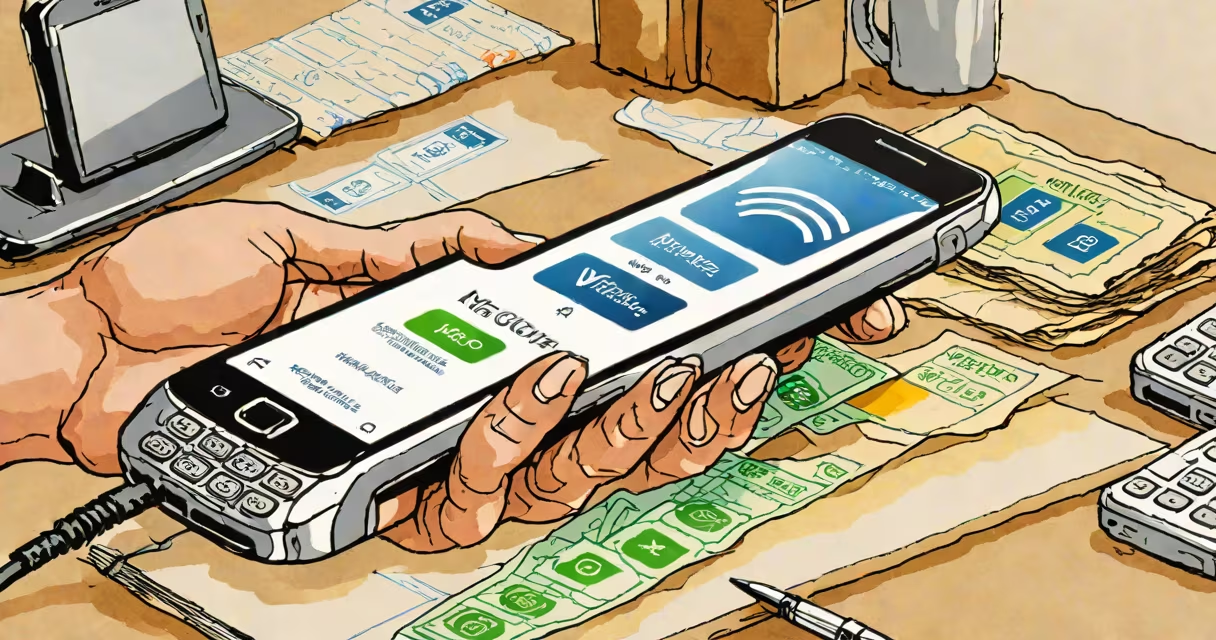
Cell phone near field communication (NFC) is a short-range wireless technology that enables secure contactless payments and data transfers between devices. It operates at 13.56 MHz and requires devices to be within 4 cm of each other.
NFC uses electromagnetic induction to establish communication between two devices. One device generates a radio frequency field, which induces a current in the other device. This allows for bidirectional communication.
NFC operates in three modes: peer-to-peer, read/write, and card emulation. In peer-to-peer mode, two NFC-enabled devices can exchange data. In read/write mode, an NFC device can read or write data to an NFC tag. In card emulation mode, an NFC device can emulate a contactless smart card.
NFC is used in various applications, including:
NFC is often confused with other wireless technologies, such as Bluetooth and RFID. However, there are key differences:
| Technology | Range | Data Transfer Rate | Power Consumption |
|---|---|---|---|
| NFC | Up to 4 cm | Up to 424 kbps | Low |
| Bluetooth | Up to 100 meters | Up to 3 Mbps | Moderate |
| RFID | Up to 100 meters | Up to 6.6 Mbps | Low |
Unlike Bluetooth, NFC does not require pairing and has a much shorter range. Unlike RFID, NFC supports two-way communication.
However, that NFC is not foolproof. Hackers can potentially intercept data if proper security measures are not in place. To improve security, many NFC-enabled devices use additional layers of authentication, such as biometric verification.
I recently used NFC to make a contactless payment at a coffee shop. I simply tapped my smartphone on the payment terminal, and the transaction was completed in seconds. The process was smooth and secure, thanks to the encryption and tokenization features of NFC.
According to a study by Statista, the number of NFC payments worldwide is expected to reach 50 billion by 2024. This highlights the growing popularity and acceptance of NFC technology.