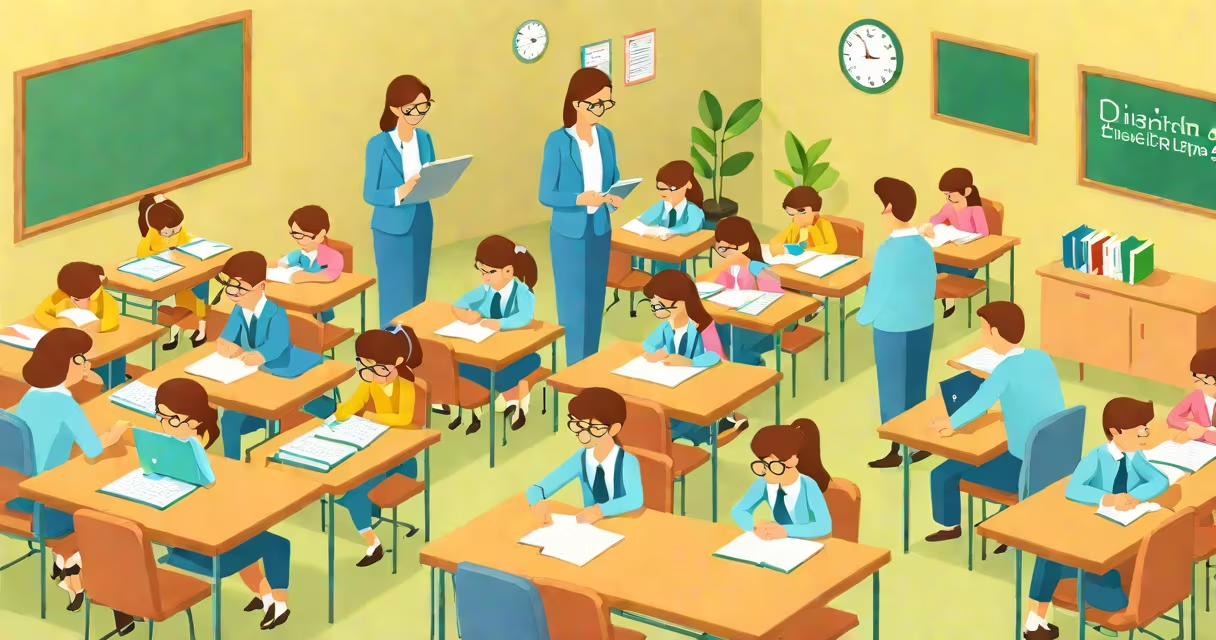
Discipline in education is a structured system of rules, expectations, and consequences designed to create an orderly learning environment. It helps students develop self-control, respect for others, and responsibility for their actions.
Effective discipline relies on clear communication, consistency, and fairness. Teachers set expectations at the start of the school year and reinforce them daily. When students follow these rules, they receive positive reinforcement. When they don't, teachers apply consequences that are logical and related to the behavior.
For example, a teacher might establish a rule that students must raise their hands to speak. If a student interrupts, the consequence could be losing the privilege of participating in group discussions for the rest of the day. This approach helps students understand the direct impact of their actions.
| Type | Description | Example |
|---|---|---|
| Positive Reinforcement | Rewarding good behavior to encourage its repetition | A teacher gives a student a sticker for completing homework on time |
| Logical Consequences | Applying consequences directly related to the misbehavior | A student who forgets their pencil must use a borrowed one and write a reflection on responsibility |
| Restorative Practices | Focusing on repairing harm and rebuilding relationships | A student who disrupts class apologizes to the group and proposes a solution to prevent future disruptions |
Discipline creates a safe and productive learning environment. According to research from the University of Michigan, well-structured discipline improves academic performance, reduces classroom disruptions, and fosters a sense of community among students.
Discipline also teaches students essential life skills. By following rules and accepting consequences, students learn accountability, respect, and problem-solving abilities. These skills prepare them for future challenges in higher education and the workplace.
Many people confuse discipline with punishment. While punishment focuses on making students suffer for their mistakes, discipline aims to correct behavior and teach responsibility. For example, sending a student to detention is punishment, but requiring them to apologize and make amends is discipline.
Another misconception is that strict discipline stifles creativity. However, structure provides a foundation for creative expression. A well-disciplined classroom allows students to explore ideas freely within established boundaries.
The Montessori method is a famous example of disciplined learning. In Montessori classrooms, students choose their activities from a structured menu of options. This approach encourages independence while maintaining order. Teachers guide students toward appropriate choices rather than enforcing rigid rules.
I observed this firsthand during a visit to a Montessori school. Students worked quietly on individual projects, moving between activities without disruption. The classroom was calm yet engaging, demonstrating how discipline supports both freedom and focus.
While discipline focuses on managing student behavior, tenure protects teachers' jobs. Tenure ensures educators can teach without fear of unfair dismissal, allowing them to enforce discipline consistently. Without tenure, teachers might avoid disciplinary actions to protect their careers, leading to chaos in the classroom.
The definition of discipline in education goes beyond punishment-it's about creating a structured environment where students thrive. By setting clear expectations and applying fair consequences, teachers help students develop essential skills for success in school and life.