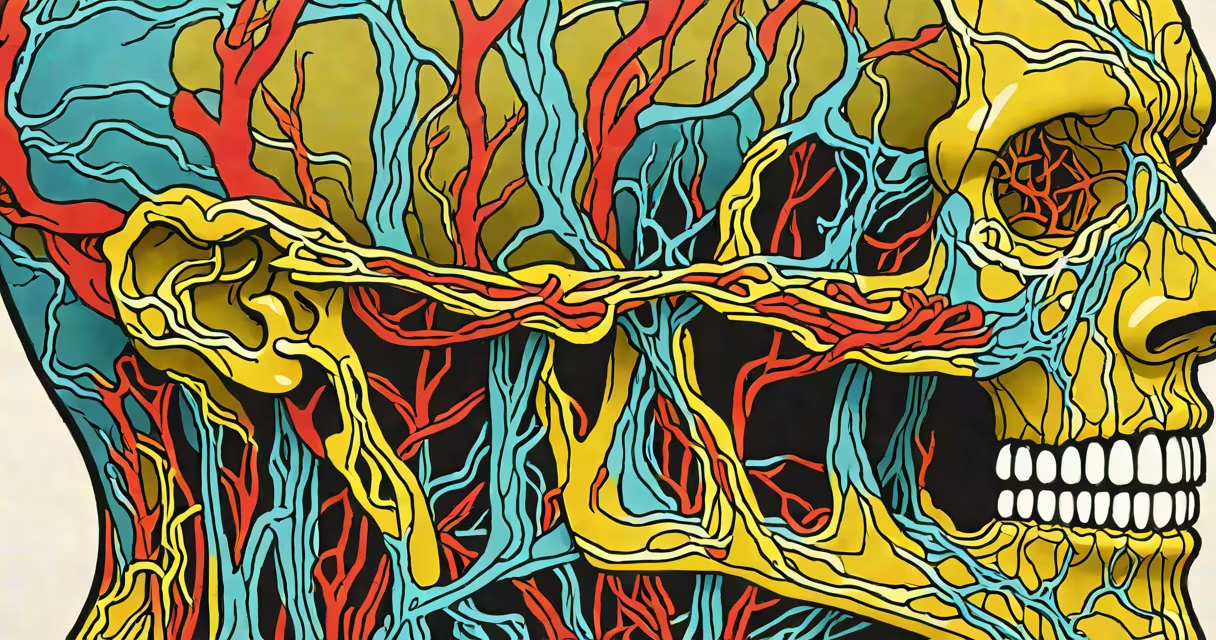
Face pain from toothache occurs when dental problems trigger pain signals through the trigeminal nerve, causing discomfort in cheek, temple, or ear regions. This "referred pain" confuses many patients who assume unrelated conditions cause their symptoms.
The trigeminal nerve connects your teeth to facial areas. When a tooth becomes infected or abscessed, pressure builds up, stimulating nerve endings. These signals travel along the nerve's branches, creating pain in distant facial locations.
For example, an upper molar infection often causes cheek pain because its nerve roots connect to that area. A lower molar problem may radiate toward the jaw joint or ear due to shared neural pathways.
| Tooth Location | Common Referred Pain Areas |
|---|---|
| Upper molars | Cheek, under eye, temple |
| Lower molars | Jaw joint, ear, side of neck |
| Front teeth | Nose, upper lip, between eyes |
Many people mistake tooth-related face pain for sinus infections, migraines, or temporomandibular joint disorder (TMJ). The confusion arises because these conditions share similar pain locations and triggers.
A 2018 study in Journal of Oral Rehabilitation found 42% of patients with tooth-related face pain initially sought treatment for TMJ issues. The key difference: dental pain typically worsens with chewing or temperature changes, while TMJ pain responds better to jaw movement exercises.
First, identify if your face pain stems from dental issues. Try these tests:
If tests indicate dental origins, see a dentist immediately. Untreated infections can spread to facial tissues, creating serious complications. In my practice, I've seen patients with weeks of unexplained face pain find relief within days of addressing hidden dental infections.
Visit an emergency room if you experience:
These symptoms suggest an abscess has spread beyond normal limits, requiring immediate medical intervention.
Maintain good oral hygiene to prevent tooth decay and gum disease. Regular dental checkups help catch small problems before they become painful. For those with known dental issues, prompt treatment prevents pain structures.
Remember, persistent face pain always requires professional evaluation. While toothaches often cause referred pain, other serious conditions can produce similar symptoms. Proper diagnosis ensures appropriate treatment.