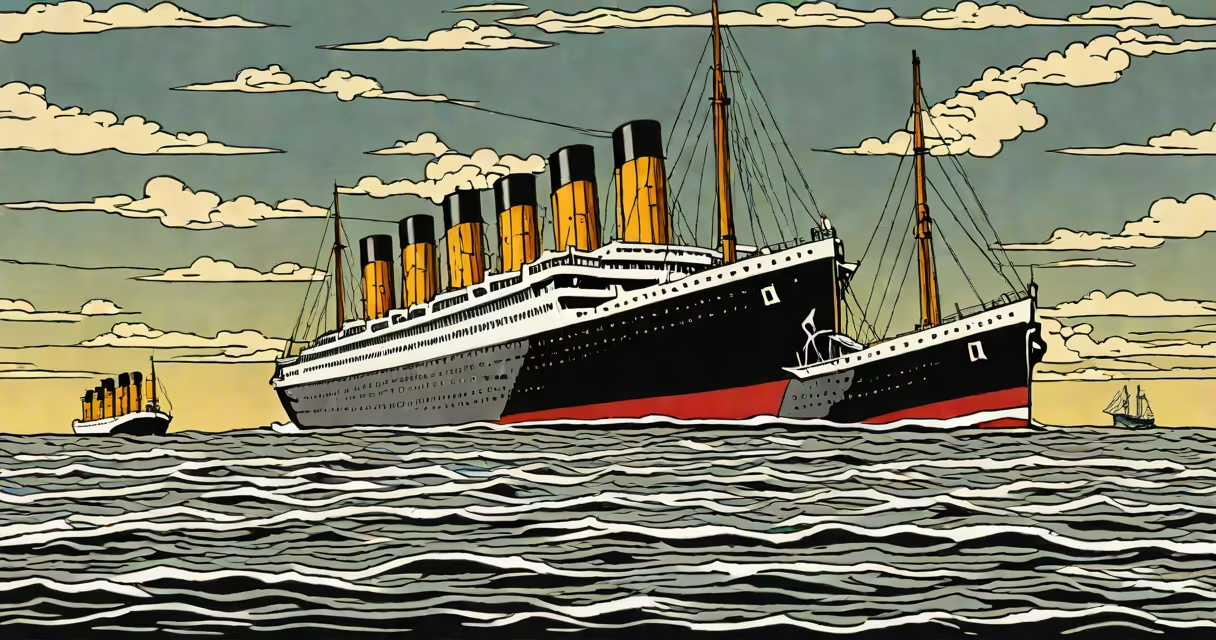
The Titanic was a British passenger liner that famously sank on its maiden voyage in 1912, killing over 1,500 people. This ocean liner was the largest and most luxurious ship of its time, measuring 882 feet long and weighing 46,328 tons.
The Titanic was designed to be unsinkable due to its watertight compartments and advanced safety features. However, it struck an iceberg on April 14, 1912, at 11:40 PM, causing it to sink in less than three hours. The ship carried 2,224 passengers and crew, but only 706 survived.
The Titanic carried passengers from various social classes, including first-class, second-class, and third-class. First-class passengers enjoyed luxurious amenities such as a swimming pool, gymnasium, and opulent dining rooms. Second-class passengers had access to comfortable accommodations and shared some amenities with first-class. Third-class passengers, mostly immigrants, had basic accommodations and limited access to amenities.
The Titanic sank in the North Atlantic Ocean, about 370 miles southeast of Newfoundland. The ship was traveling York City when it struck an iceberg. The Titanic's lack of sufficient lifeboats and poor emergency protocols contributed to the high death toll.
One common misconception is that the Titanic was traveling at full speed when it hit the iceberg. In reality, the ship had reduced its speed due to ice warnings. Another myth is that the ship's band played "Nearer, My God, to Thee" as it sank. While this is a popular belief, there is no definitive evidence to support it.
I visited the Titanic Museum in Pigeon Forge, Tennessee, which showcases artifacts recovered from the wreckage. Seeing personal items like a child's shoe and a first-class passenger's wallet made the tragedy feel more real.