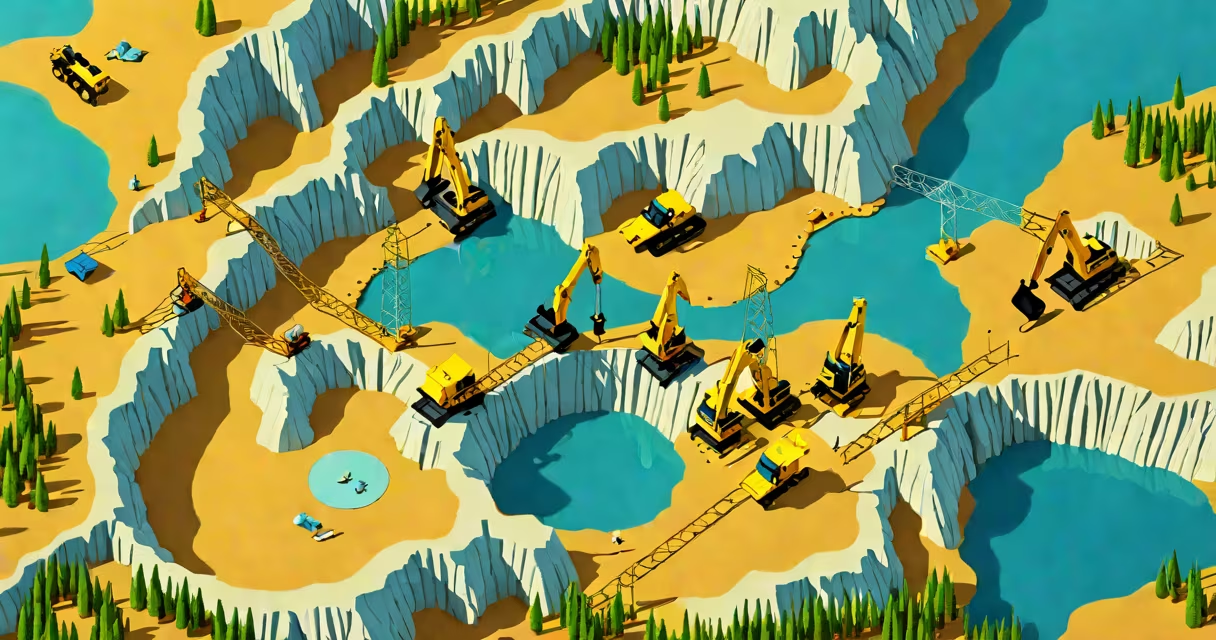
Titanium mining extracts titanium-bearing minerals from the earth, primarily through open-pit or dredging methods. The process involves separating titanium ores like rutile, ilmenite, and leucoxene from other minerals.
Titanium doesn't exist as a pure metal in nature. Instead, it's found in mineral deposits, often mixed with oxygen and other elements. The most common titanium-bearing minerals are:
These minerals form in igneous rocks, beach sands, and sedimentary deposits. Australia, China, and South Africa hold the largest reserves.
Titanium mining typically follows these steps:
For example, the Richlands titanium project in Western Australia uses open-pit mining to extract high-grade ilmenite ore.
Once extracted, titanium ores undergo chemical processing to produce pure titanium. The Kroll process is the most common method:
This process requires extreme temperatures (up to 800°C) and precise chemical control.
Titanium mining impacts ecosystems through land disturbance and water use. However, titanium itself is non-toxic and recyclable. Modern mining practices include:
According to the U.S. Geological Survey, global titanium production reached 7.7 million metric tons in 2022, with demand growing for aerospace and medical applications.
Many assume titanium is rare, but it ranks ninth among Earth's most abundant elements. The challenge lies in extracting and purifying it, not scarcity.
Another myth is that titanium mining always causes severe environmental harm. While open-pit mines disrupt landscapes, responsible operations mitigate damage through restoration efforts.
Titanium's strength-to-weight ratio makes it essential for aircraft, spacecraft, and medical implants. Understanding how it's mined highlights the trade-offs between resource extraction and sustainability.
For instance, the Boeing 787 Dreamliner uses 15% titanium by weight, reducing fuel consumption while maintaining structural integrity.
To learn more about titanium's uses, see where titanium is used.