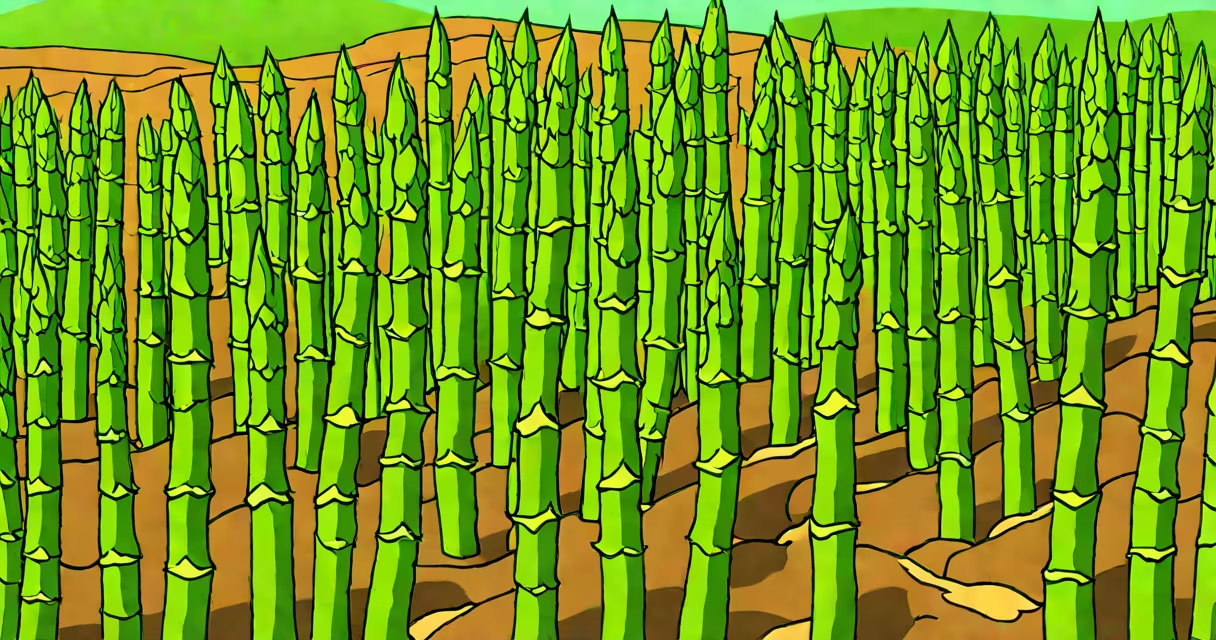
Asparagus is a perennial vegetable grown from crowns planted in early spring or fall. It requires well-drained soil, full sun, and consistent moisture to produce edible spears for 15-20 years.
Asparagus plants develop from underground stems called crowns. In their first year, they grow fern-like foliage through photosynthesis, storing energy in their roots. Spear production begins in the second or third year. Each spear grows about ¼ inch per day until it becomes a tall, feathery fern.
Most asparagus varieties are green, but other colors exist:
| Type | Color | Flavor Profile |
|---|---|---|
| Green | Green | Classic grassy flavor |
| White | White | Milder, sweeter taste |
| Purple | Purple | Fruity, slightly sweet |
Green asparagus is the most common variety, while white asparagus is grown by excluding light during growth. Purple asparagus contains anthocyanins, which give it a sweeter taste.
Asparagus thrives in USDA hardiness zones 4-8. It's a favorite among gardeners because it's a low-maintenance crop that returns year after year. The spears are rich in vitamins A, C, and K, making them a nutritious addition to any diet.
Many gardeners assume asparagus is difficult to grow, but with proper care, it's surprisingly resilient. Another myth is that asparagus requires deep soil to prevent spears from bending. In reality, well-drained soil is more critical than depth.
1. Choose a sunny location with well-drained soil. 2. Dig a trench 12 inches deep and 12 inches wide. 3. Space crowns 12-18 inches apart in the trench. 4. Cover crowns with 2 inches of soil. 5. Gradually fill the trench as the plants grow. 6. Water regularly, keeping the soil consistently moist.
I planted my first asparagus crowns three years ago, and they've since become a staple in my garden. The key to success is patience-waiting for the plants to mature before harvesting ensures a bountiful yield for years to come.