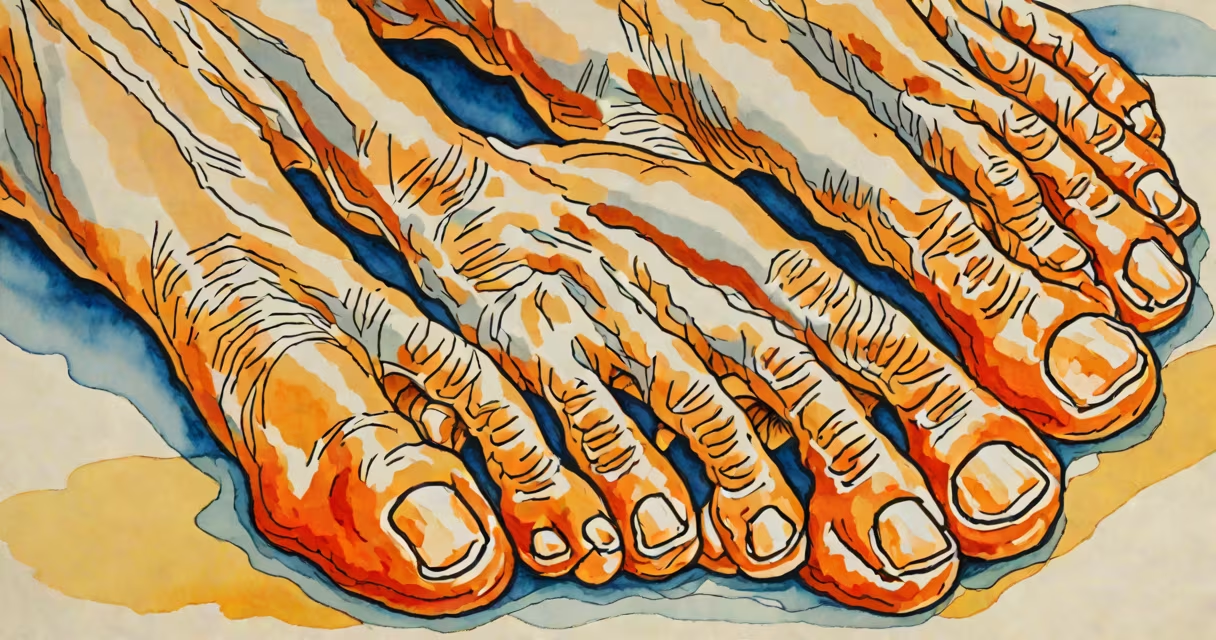
Gout in the big toe occurs when uric acid crystals accumulate in the joint, causing severe pain and inflammation. Treatment focuses on relieving symptoms and preventing future attacks.
Gout develops when the body produces too much uric acid or can't excrete it efficiently. The acid forms sharp crystals that lodge in joints, often the big toe due to its lower temperature. This triggers inflammation, swelling, and intense pain.
Gout treatments fall into two categories: medications for immediate relief and long-term prevention.
| Treatment Type | Examples | Purpose |
|---|---|---|
| Acute Treatment | Nonsteroidal anti-inflammatory drugs (NSAIDs), colchicine, corticosteroids | Relieve pain and inflammation during an attack |
| Preventive Treatment | Uric acid reducers (allopurinol, febuxostat) | Lower uric acid levels to prevent future attacks |
When gout strikes the big toe, act quickly to manage symptoms:
I once helped a friend through a gout attack by elevating his foot and applying an ice pack wrapped in a towel. The swelling reduced noticeably within an hour.
Many people assume gout only affects heavy drinkers or older men, but it can impact anyone. Another myth is that once gout goes away, it's cured-actually, without prevention, attacks often return worse.
According to the Arthritis Foundation, about 80% of gout patients have recurrent attacks within two years if untreated.
Consult a healthcare provider if:
Doctors may prescribe specific medications or recommend lifestyle changes to manage uric acid levels.