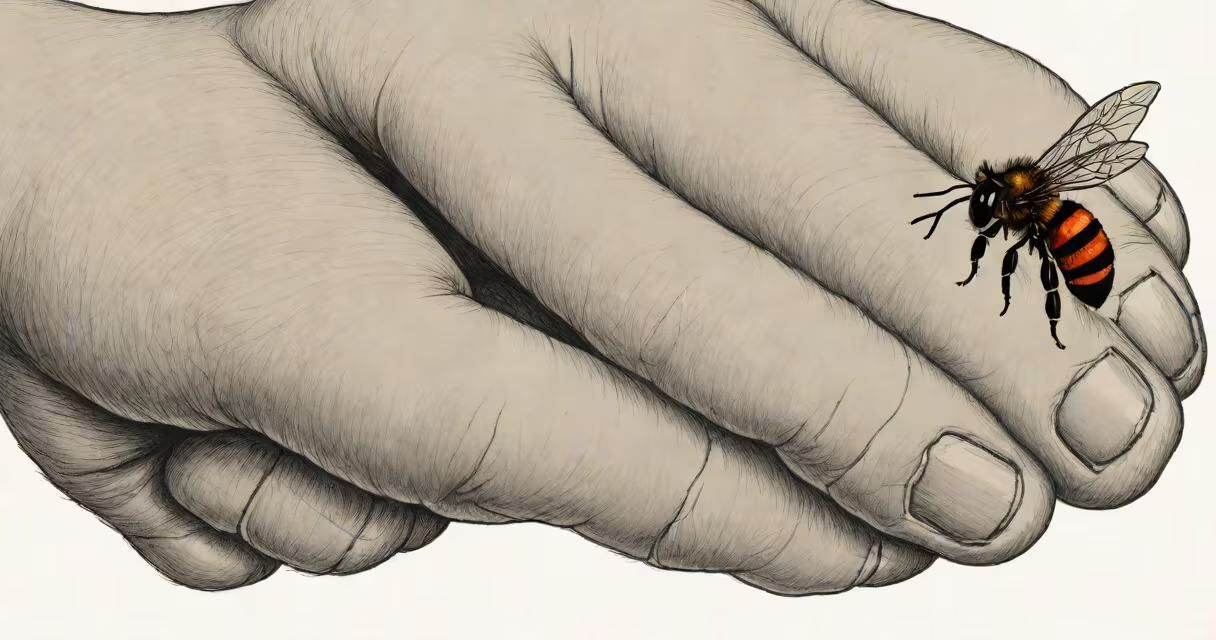
A bee sting causes an itchy, red welt due to venom injected under the skin. Treat it immediately with ice, antihistamines, or natural remedies to reduce swelling and discomfort.
Bee venom contains melittin, a compound that triggers histamine release, causing itching. The body reacts by swelling the area to dilute the venom. Without treatment, itching can last hours or even days.
| Type | Pain Level | Duration |
|---|---|---|
| Honeybee | Moderate to severe | 3-4 hours |
| Wasp | Severe | 1-2 days |
| Yellow jacket | Intense | Several days |
Honeybees leave their stinger embedded in the skin, while wasps and yellow jackets can sting repeatedly.
First, remove the stinger if present by scraping it out with a credit card. Do not squeeze it, as this releases more venom. Wash the area with soap and water, then apply an ice pack wrapped in a cloth for 10 minutes to reduce swelling.
Take an over-the-counter antihistamine like Benadryl to relieve itching. Apply a baking soda paste (mix 1 tablespoon of baking soda with a few drops of water) to the sting site. Leave it on for 15-20 minutes before rinsing off.
Seek medical attention if the sting causes difficulty breathing, dizziness, or rapid pulse, as these may indicate an allergic reaction. Other signs include nausea, vomiting, or swelling beyond the sting site.
If the itching persists for more than 48 hours or if the area becomes infected (redness increases, warmth, pus), consult a doctor. Antibiotics may be needed to treat infection.
Aloe vera gel soothes the skin and reduces inflammation. Apply a thin layer directly to the sting site. Honey (not from the same bee species!) has antibacterial properties and can help draw out venom.
Apple cider vinegar balances the skin's pH level, reducing itching. Dilute with water (1:1 ratio) and apply with a cotton ball. A cold compress with black or green tea bags can also alleviate discomfort due to their tannins, which reduce inflammation.
I once treated a bee sting on my forearm using a cold compress and aloe vera gel. The itching stopped within 30 minutes, and the swelling went down after a few hours.
Some believe that applying heat to a bee sting helps, but this can worsen swelling. Others think that rubbing alcohol is effective, but it can irritate the skin further. Always opt for ice and antihistamines instead.
Wear light-colored clothing when outdoors, as bees are attracted to dark colors. Avoid strong perfumes and floral scents. Stay calm around bees-they sting defensively, not aggressively. If a bee flies near you, move away slowly without swatting.
Keep food and drinks covered during picnics to avoid attracting bees. If you're allergic to bee stings, consider carrying an emergency kit with antihistamines and an epinephrine auto-injector.