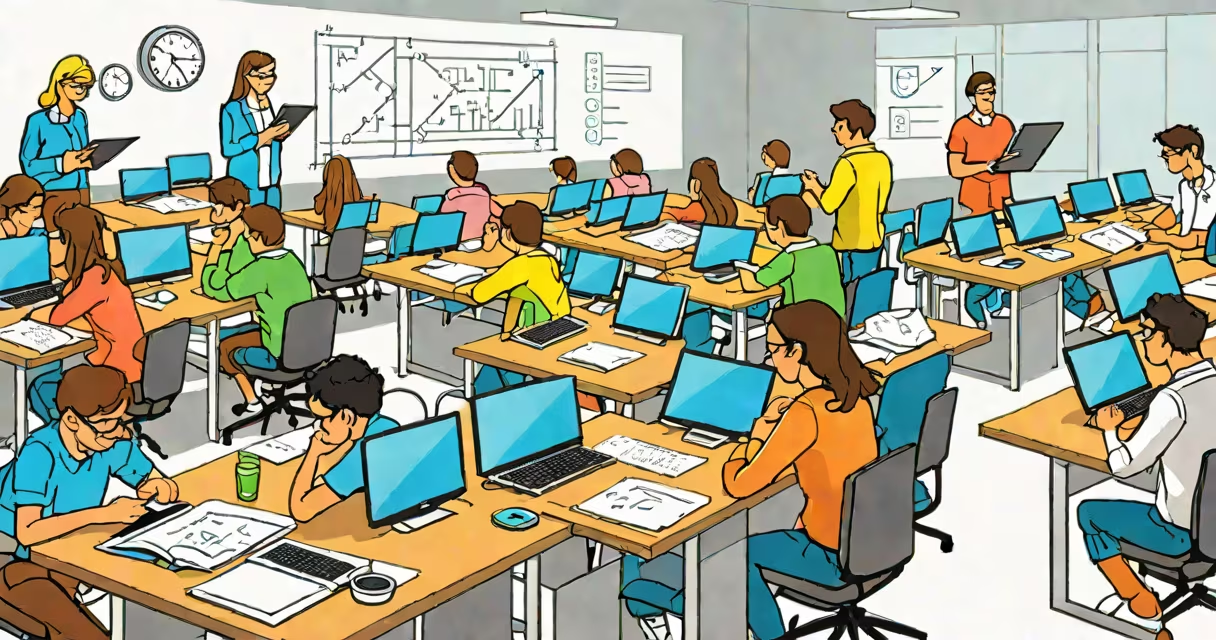
ICT (Information and Communication Technology) in schools refers to the use of digital tools, software, and networks to improve teaching and learning. It transforms traditional classrooms by integrating technology like computers, tablets, and interactive whiteboards into daily education.
ICT in schools operates through hardware, software, and online platforms. For example, a teacher might use a tablet to project lessons while students respond via apps on their own devices. Schools also rely on secure networks to manage access and protect student data.
| Type | Examples | Primary Use |
|---|---|---|
| Hardware | Computers, tablets, interactive whiteboards | Delivering lessons, student projects |
| Software | Learning management systems, educational apps | Assignments, quizzes, tracking progress |
| Networks | School Wi-Fi, cloud storage | Accessing resources, collaboration |
ICT improves engagement, accessibility, and personalized learning. A study by the OECD found that schools with strong ICT programs saw a 15% increase in student participation. For instance, special education students benefit from text-to-speech software, making learning materials more accessible.
Many assume ICT replaces teachers, but it actually enhances their role. Tools like virtual labs allow teachers to demonstrate complex science concepts more effectively. I once observed a biology class where students used VR headsets to explore the human heart-far more engaging than a textbook diagram.
Emerging technologies like AI tutors and adaptive learning platforms will further personalize education. Schools are already experimenting with chatbots that answer student questions 24/7. As ICT evolves, its role in schools will expand, making digital literacy a core part of education worldwide.