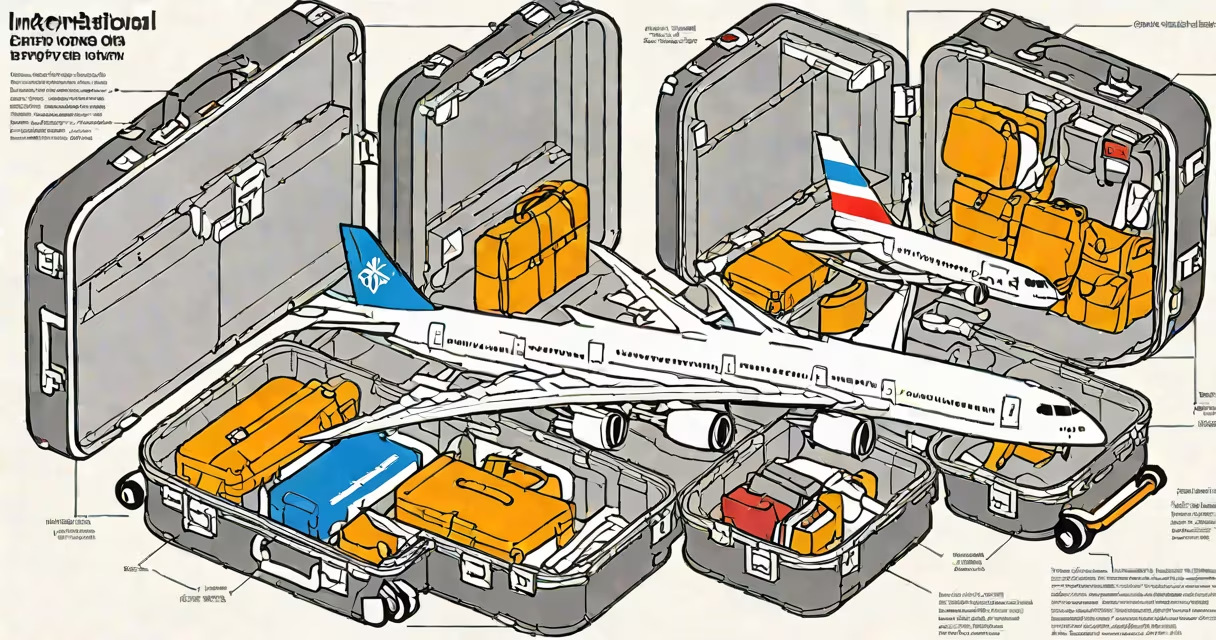
Most international airlines limit carry on dimensions to 22 x 14 x 9 inches (56 x 36 x 23 cm) to fit overhead bins. These measurements include handles and wheels.
Airlines design their carry on policies around standard overhead bin sizes. The International Air Transport Association (IATA) recommends bins measuring 22 x 14 x 9 inches, which explains why most airlines adopt similar dimensions. However, budget airlines often impose stricter limits to maximize cabin space.
The three most common carry on policies are:
| Policy Type | Dimensions | Notes |
|---|---|---|
| Standard | 22 x 14 x 9 inches | Most legacy carriers |
| Strict | 18 x 14 x 8 inches | Budget airlines |
| Personal Item | 18 x 14 x 8 inches | Additional small bag |
Carry on dimensions affect both packing efficiency and potential fees. A well-packed 22-inch carry on can replace multiple checked bags. However, exceeding size limits typically results in checked baggage fees, which can cost $30-$75 per bag depending on the airline.
When I traveled through Europe last year, my 22-inch carry on fit perfectly in Ryanair's overhead bins, but my companion's slightly larger bag had to be checked at the gate for $50. This experience drove home the importance of verifying exact dimensions before flying.
While most airlines follow similar guidelines, some have unique requirements. For instance, Spirit Airlines allows carry ons up to 22 x 18 x 10 inches but charges for any bag larger than 18 x 14 x 8 inches. JetBlue permits two carry ons under 22 x 14 x 9 inches each, while Southwest allows one carry on plus a personal item.
Always verify your specific airline's policy before packing. The IATA website provides a complete list of airline baggage policies worldwide.