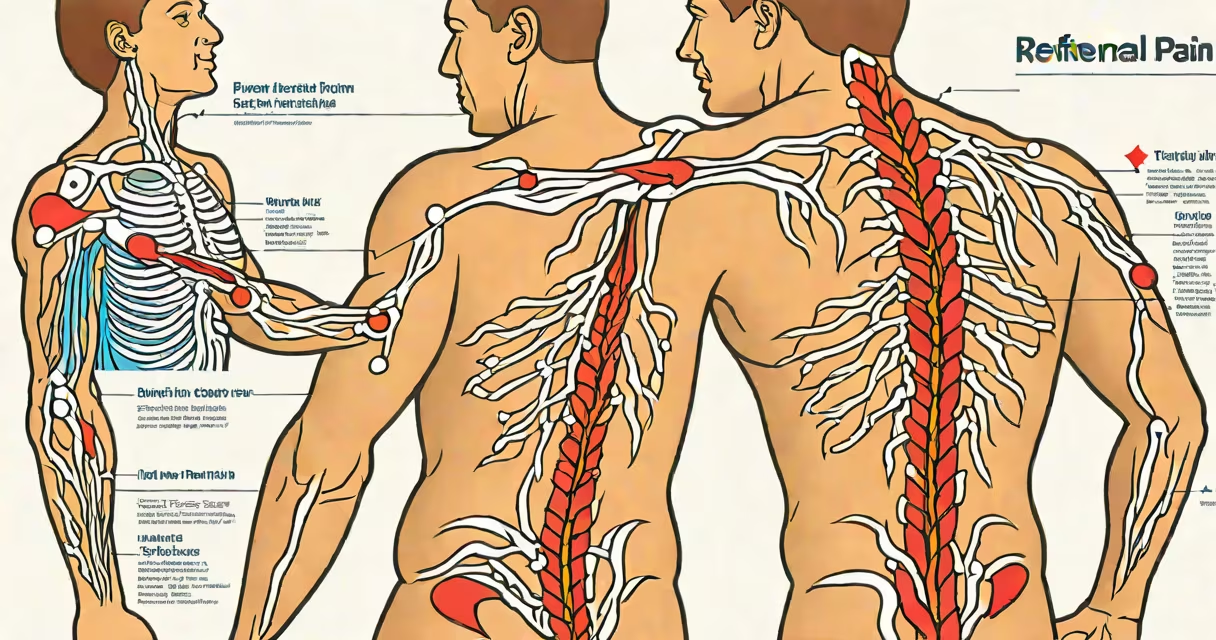
Mid back referred pain happens when discomfort originates in one area but spreads to another, often due to muscle strain or nerve compression. This differs from localized pain, which stays in one spot.
Referred pain occurs when nerves from the affected area share pathways with nerves in other regions. For example, irritation of the thoracic spine (mid back) can cause pain to radiate around the ribcage or even to the front of the chest. This happens because the spinal nerves branch out to multiple areas.
The brain sometimes misinterprets the pain's origin. A classic example is heart attack pain, which can feel like mid back pain even though the heart is the source. Similarly, gallbladder issues may cause pain between the shoulder blades.
| Type | Common Source | Typical Referral Pattern |
|---|---|---|
| Muscle-related | Strained trapezius or rhomboid muscles | Pain radiates from mid back to shoulders or upper arms |
| Nerve-related | Pinched thoracic nerves | Pain moves around the ribcage or to the front of the chest |
| Organ-related | Gallbladder or stomach issues | Pain refers to between shoulder blades or upper back |
Most cases stem from muscle imbalances, poor posture, or direct trauma. The trapezius and rhomboid muscles are frequent culprits. When these muscles tighten due to stress or overuse, they can compress nearby nerves, causing referred pain.
Other causes include herniated thoracic discs, which press on spinal nerves, and internal organ issues like gallstones or ulcers. Even psychological stress can contribute by increasing muscle tension.
A study published in the Journal of Manipulative and Physiological Therapeutics found that 37% of mid back pain cases involved referred pain patterns. Many patients initially mistook the pain for heart or lung issues.
Referred pain often follows predictable patterns. For example, pain from the trapezius muscle typically radiates to the shoulder and upper arm. Nerve-related pain may follow a specific dermatome pattern, such as pain along the ribcage.
One way to test for referred pain is through manual palpation. Pressing on a tight muscle or trigger point should reproduce the pain in the referred area. Movement-based tests, like rotating the torso, can also help identify the source.
I once treated a patient who thought their mid back pain was from a heart condition. Manual therapy targeting the trapezius muscle completely resolved their symptoms, confirming referred pain.
See a healthcare provider if mid back referred pain persists for more than a few weeks, worsens at night, or comes with other symptoms like nausea, shortness of breath, or numbness. These could indicate serious conditions requiring medical attention.
Diagnostic tools like X-rays, MRIs, or nerve conduction studies can help identify the underlying cause. Treatment options range from physical therapy and medications to more invasive procedures, depending on the diagnosis.