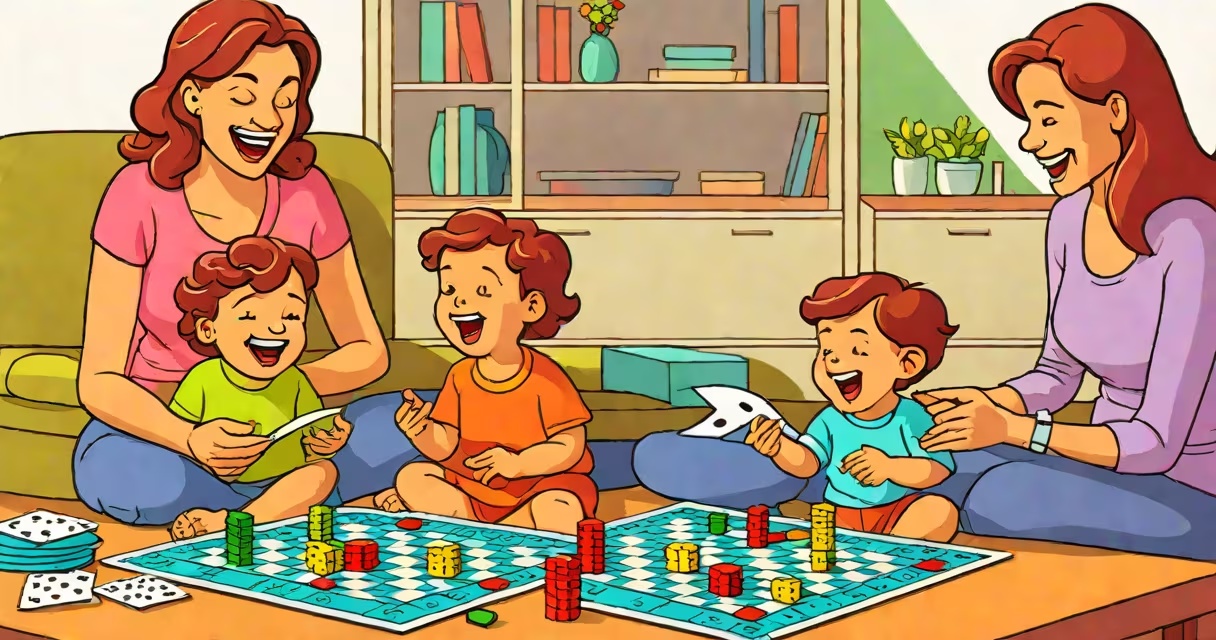
Mom and kid plays are interactive activities designed to build bonding between parents and children through shared fun and creativity. These simple games often require minimal setup and focus on engagement rather than competition.
These activities typically involve turn-taking, storytelling, or problem-solving. They can be adapted to suit different ages and interests. For example, younger children might enjoy simple games like "Simon Says" or "Hide and Seek," while older kids might prefer more complex activities like building a fort or creating a homemade science experiment.
| Type | Description | Example |
|---|---|---|
| Creative Play | Activities that encourage imagination and self-expression | Drawing, painting, or making crafts together |
| Physical Play | Games that involve movement and physical activity | Running, jumping, or playing sports |
| Verbal Play | Activities that focus on language and communication | Storytelling, rhyming games, or word puzzles |
| Problem-Solving Play | Games that require critical thinking and strategy | Board games, puzzles, or building projects |
According to the American Academy of Pediatrics, interactive play between parents and children helps develop social skills, emotional intelligence, and cognitive abilities. These activities provide opportunities for children to learn through exploration and experimentation while strengthening the parent-child relationship.
A study published in the journal Pediatrics found that children who engage in regular play with their parents exhibit better problem-solving skills and emotional regulation. These benefits extend beyond childhood, contributing to long-term developmental success.
Many people assume that mom and kid plays must be elaborate or expensive. However, the best activities often involve simple, everyday objects. For instance, using household items to create a scavenger hunt or turning a walk in the park into a nature exploration can be just as effective as buying a new toy.
Another misconception is that these activities need to be structured or follow strict rules. While some games do have guidelines, the most valuable moments often come from unstructured, spontaneous play. The key is to focus on the joy of shared experiences rather than achieving specific outcomes.
One simple yet effective mom and kid play is collaborative storytelling. Start by having your child come up with a character and a setting. Then, take turns adding sentences to the story. This activity encourages creativity, language development, and bonding.
For example, you might begin with, "Once upon a time, there was a brave knight who lived in a magical forest." Your child could continue, "The knight had a talking horse who loved apples." You might add, "One day, they set off on an adventure to find a hidden treasure." This back-and-forth can go on for as long as both of you are engaged and having fun.
Mom and kid plays are a useful tool for fostering connection and development. By engaging in simple, creative activities, parents can help their children build essential skills while creating lasting memories. Whether through storytelling, physical games, or problem-solving challenges, these interactions form the foundation of a strong, loving relationship.