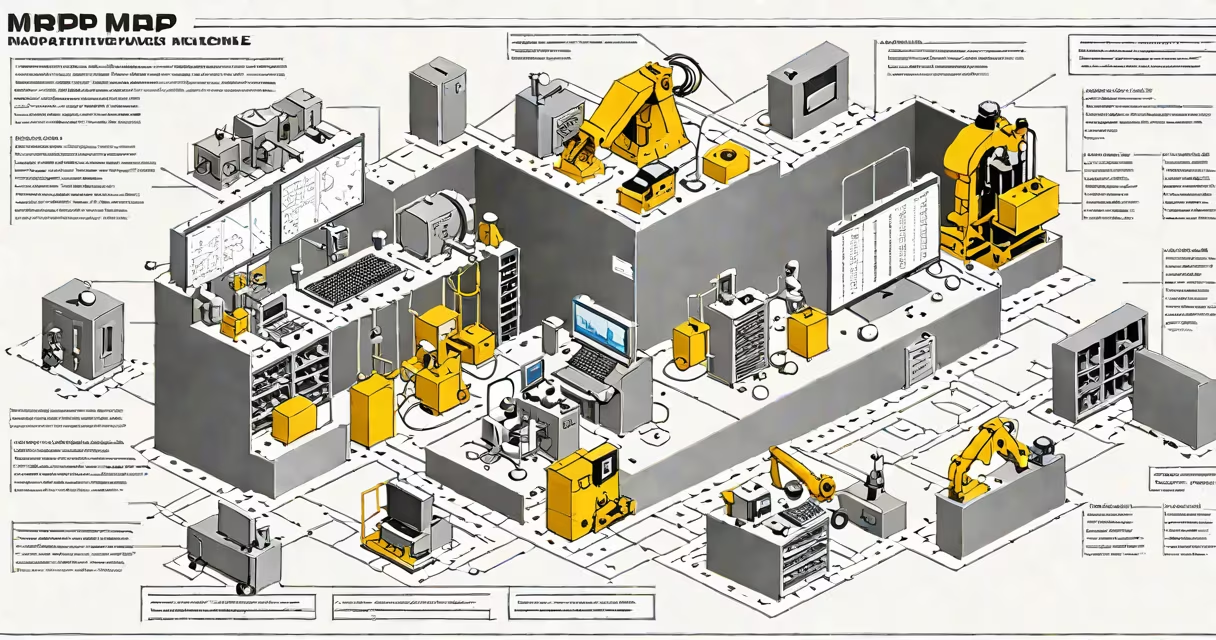
MRP stands for Material Requirements Planning, a software system that calculates raw material needs, generates production schedules, and manages inventory levels for manufacturers.
An MRP system takes a bill of materials (BOM) and a master production schedule as inputs. It then performs net requirements calculations to determine what materials are needed, when orders should be placed, and what existing inventory can be used. The output is a detailed production schedule with purchase orders for suppliers.
For example, if your factory produces bicycles, an MRP system would calculate how many wheels, frames, and handlebars are needed based on your production schedule. It would then generate purchase orders for suppliers to deliver those parts just in time for assembly.
Modern MRP systems typically include:
Many confuse these similar-sounding systems. Here's how they differ:
| System | Scope | Key Functions |
|---|---|---|
| MRP | Materials only | Inventory, BOM processing, basic scheduling |
| MRP II | Materials + shop floor | Adds capacity planning, cost tracking, and quality control |
| ERP | Enterprise-wide | Includes finance, HR, and other departments beyond manufacturing |
One frequent mistake is assuming MRP only handles raw materials. In reality, most modern MRP systems track purchased components, subassemblies, and finished goods. Another misconception is that MRP eliminates the need for safety stock. While it reduces inventory levels, most manufacturers still maintain some buffer stock for unexpected demand fluctuations.
I once implemented an MRP system for a small machine shop. Before the system, they were constantly running out of critical components or ordering too much inventory. After implementation, their stockouts dropped by 85% and inventory carrying costs fell by 30%. The key was getting accurate lead times from suppliers and maintaining clean bill of materials records.
Companies typically implement MRP systems when they face these challenges:
According to a study by the APICS, manufacturers using MRP systems typically reduce setup times by 20-50% and increase on-time deliveries by 10-30%. However, successful implementation requires accurate data entry and regular system updates.