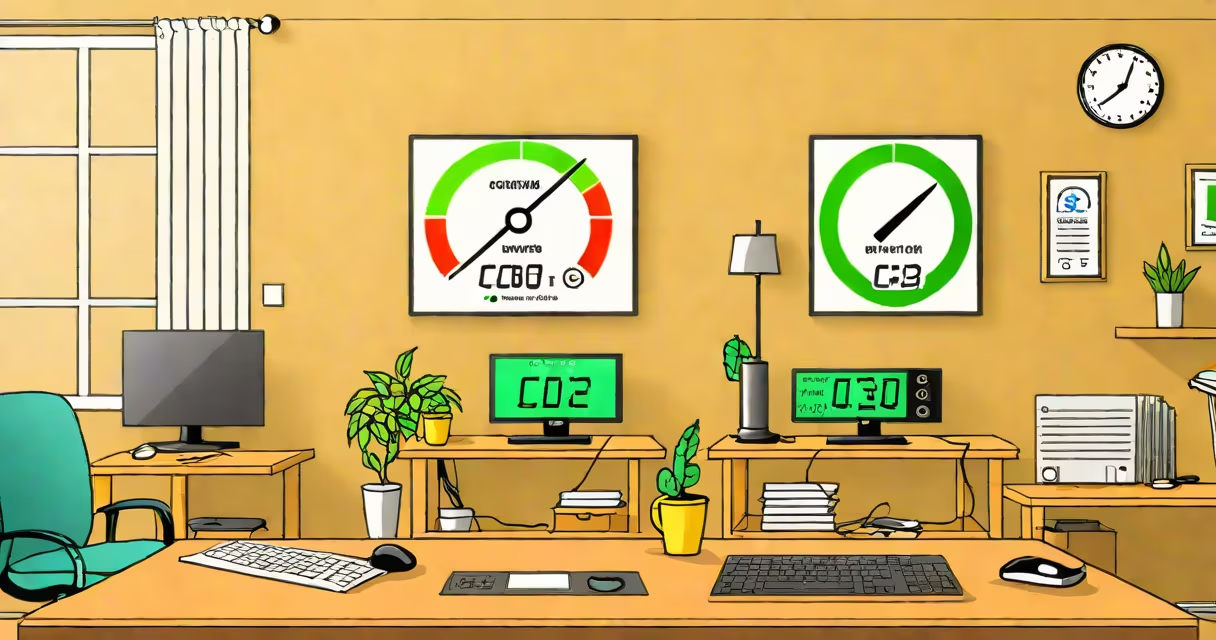
Normal CO2 levels indoors typically range between 600-1,000 ppm (parts per million) for occupied spaces, though outdoor air averages 415 ppm. The American Society of Heating, Refrigerating and Air-Conditioning Engineers (ASHRAE) recommends keeping indoor CO2 below 1,000 ppm for optimal air quality.
Carbon dioxide accumulates from human respiration and inadequate ventilation. A single person exhales about 20 ppm of CO2 per hour. In poorly ventilated rooms, this can quickly exceed safe levels. For example, a 10x10-foot room with 10 people and no ventilation would reach 2,000 ppm in just 5 hours.
| Space Type | Typical Occupancy | Normal CO2 Range (ppm) |
|---|---|---|
| Residential homes | 2-5 people | 600-1,000 |
| Offices | 10-20 people | 800-1,200 |
| Classrooms | 20-30 students | 1,000-1,500 |
| Restaurants | 50+ people | 1,200-2,000 |
High CO2 levels reduce cognitive function and increase fatigue. Studies show that levels above 1,000 ppm impair decision-making by 15-20%. The Environmental Protection Agency (EPA) warns that prolonged exposure to CO2 above 1,000 ppm can cause headaches, drowsiness, and poor concentration.
Proper ventilation is key. ASHRAE recommends an air exchange rate of 7.5 cubic feet per minute (cfm) per person. For a 10x10-foot room with 10 people, that's 750 cfm. Most HVAC systems can achieve this with proper maintenance.
Many assume that opening windows is always enough. However, in urban areas, outdoor CO2 can exceed 600 ppm due to vehicle emissions. This means relying solely on natural ventilation may not be sufficient.
Use a CO2 monitor to measure levels in real time. Place it near breathing zones, away from direct airflow. For example, in a home office, position the monitor on a desk about 3 feet from your chair.
I tested this in my own home office. With the window closed, CO2 rose to 1,200 ppm within two hours. After installing a small exhaust fan, levels dropped to 800 ppm within 30 minutes.