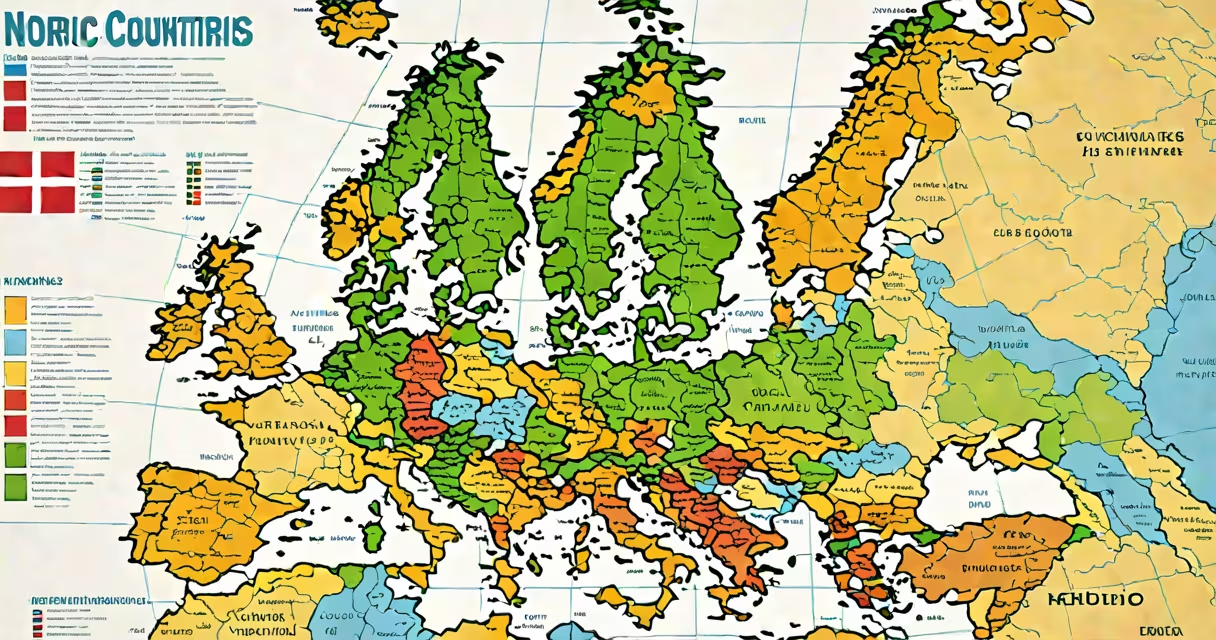
The Nordic countries are a group of five sovereign states and three autonomous territories in Northern Europe, known for their high living standards, progressive social policies, and stunning natural landscapes. These nations share cultural and historical ties, though they are distinct countries with unique identities.
The five sovereign Nordic countries are Denmark, Sweden, Norway, Finland, and Iceland. The three autonomous territories are the Faroe Islands (Denmark), Greenland (Denmark), and Åland (Finland). While often grouped together, these regions have their own governments, languages, and traditions.
The Nordic countries are renowned for their strong welfare systems, which provide universal healthcare, free education, and generous parental leave. They also prioritize environmental sustainability, with Norway and Iceland leading in renewable energy production. Culturally, they value equality, work-life balance, and outdoor activities like hiking and skiing.
Despite their small populations, Nordic countries punch above their weight in global innovation. Finland is home to Nokia, Sweden to Spotify and IKEA, and Denmark to LEGO and Carlsberg. These nations consistently rank at the top of global happiness and quality-of-life indexes.
Many people confuse the Nordic countries with Scandinavia, which only includes Denmark, Sweden, and Norway. Others assume all Nordic countries are part of the European Union, but only Denmark, Sweden, and Finland are members. Iceland and Norway are in the EU's single market but not full members.
Another myth is that everyone in the Nordic region speaks the same language. While the languages are similar, they are distinct. For example, Danish, Swedish, and Norwegian are mutually intelligible to some extent, but Finnish and Icelandic are entirely different linguistic groups.
The Nordic model is a term used to describe the economic and social policies common to the Nordic countries. This model combines free-market capitalism with a complete welfare state. Taxes are high, but citizens receive extensive benefits, including free healthcare and education. The model emphasizes equality, with policies designed to reduce income disparities and promote gender equality.
For example, Sweden has one of the highest tax rates in the world, but its citizens enjoy free university education and subsidized childcare. Similarly, Norway uses its oil revenues to fund a solid social safety net, ensuring that all citizens have access to basic necessities.
The Nordic countries are often studied as a model for sustainable development and social progress. Their policies on gender equality, environmental protection, and social welfare are influential globally., their small populations and high levels of innovation make them interesting case studies for economic growth and technological advancement.