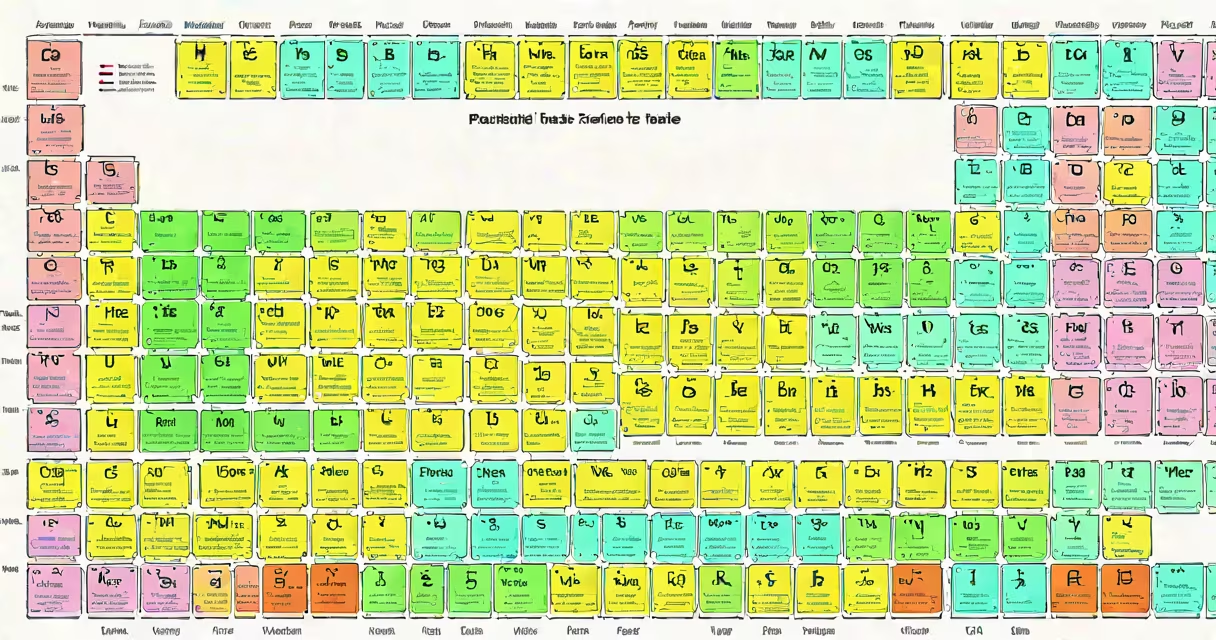
A periodic table series groups elements with similar properties into vertical columns called groups. These series reveal patterns in atomic structure and behavior.
The series arrange elements by increasing atomic number while repeating chemical properties. For example, lithium (Li), sodium (Na), and potassium (K) form the alkali metal series in Group 1. Their electron configurations share one valence electron, making them highly reactive with water.
Series appear because elements in the same group have the same number of electrons in their outer shell. This shared configuration determines how they bond and react. The table's rows (periods) show filling electron shells, while columns (groups) show elements with similar outer-electron counts.
The table contains 18 vertical series, numbered IA through VIIIA and IB through VIIIB, plus two rows of rare earth metals. Some key series include:
| Group | Name | Examples |
|---|---|---|
| IA | Alkali Metals | Lithium, Sodium, Potassium |
| IIA | Alkaline Earth Metals | Beryllium, Magnesium, Calcium |
| VIIA | Halogens | Fluorine, Chlorine, Bromine |
| VIIIA | Noble Gases | Helium, Neon, Argon |
Chemists use series to predict how elements will behave. For instance, knowing chlorine (Cl) is in the halogen series (Group VIIA) tells us it's likely to form -1 ions, like fluoride (F⁻) and bromide (Br⁻). This predictive power helps in synthesizing new compounds and understanding chemical reactions.
Series also guide the discovery of new elements. In 2016, scientists added elements 113, 115, 117, and 118 based on their expected positions in existing series. These superheavy elements extended known series while maintaining predicted properties.
Many confuse series (vertical groups) with periods (horizontal rows). While periods show filling electron shells across a row, series reveal recurring properties down columns. For example, hydrogen (H) sits above lithium in Group 1 but behaves more like a halogen due to its electron configuration.
Another mistake is assuming all elements in a series behave identically. Though they share trends, individual properties vary. Fluorine (F) is far more reactive than iodine (I), even though both are halogens.
Alkali metals (Group 1) demonstrate series properties. Each has one valence electron, making them highly reactive. When dropped in water, they explode violently, releasing hydrogen gas. Lithium (Li) fizzes mildly, while francium (Fr) would react explosively if enough existed to test.
This reactivity pattern repeats because all alkali metals readily lose their single outer electron. The series helps chemists predict behavior while cautioning about intensity differences among members.