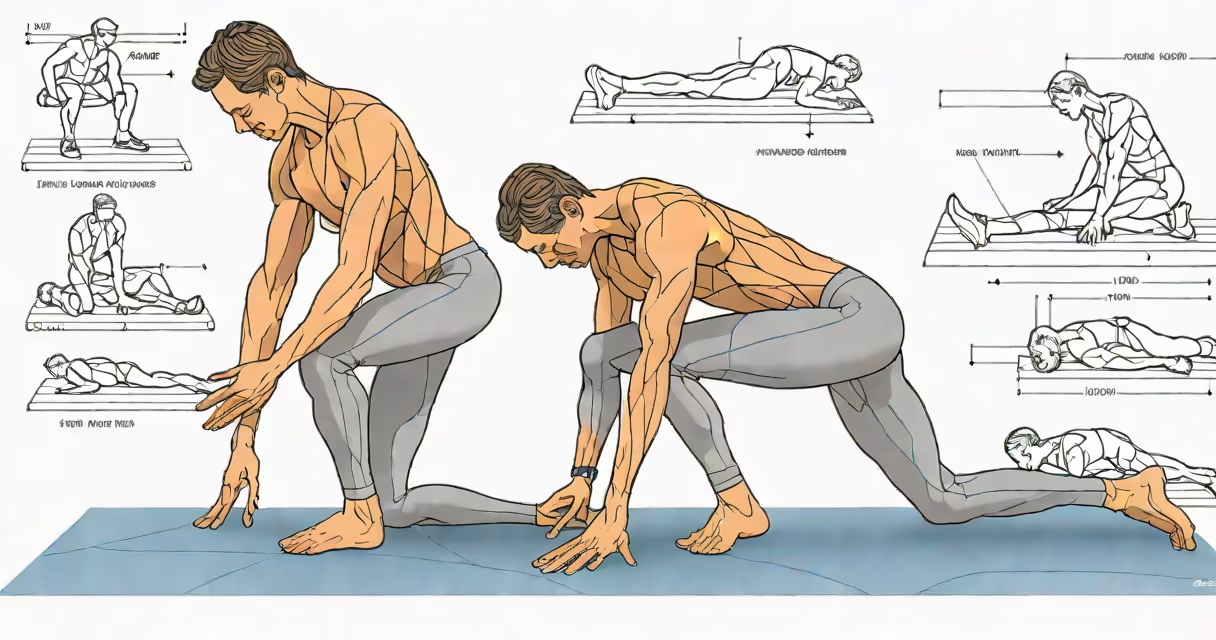
A psoas muscle pain stretch targets the iliopsoas, a major hip flexor connecting your spine to your femur. This deep stretch relieves chronic lower back pain by releasing tension in the psoas muscle, which tightens from prolonged sitting or poor posture.
The psoas muscle shortens when you sit for long periods, pulling your pelvis into an anterior tilt. This position compresses lumbar vertebrae, often causing lower back pain. The psoas also connects to the diaphragm, meaning tightness can affect breathing and core stability.
| Stretch Name | Position | Primary Benefit |
|---|---|---|
| Kneeling hip flexor stretch | One knee down, other leg forward | Targets psoas directly while keeping spine neutral |
| Seated butterfly stretch | Seated with soles of feet together | Opens hips and stretches inner thighs |
| Lunge with hip flexion | Low lunge position | Combines stretch with balance challenge |
Kneel on your left knee, placing a pad under it for comfort. Step your right foot forward into a lunge, keeping your right knee aligned above your ankle. Tuck your pelvis slightly to engage your core. Hold for 30 seconds, then switch sides. For deeper engagement, gently push your hips forward until you feel tension in the front of your left hip.
Many people arch their lower backs during psoas stretches, which defeats the purpose. Instead, maintain a neutral spine by engaging your core and slightly tucking your pelvis. Another mistake is overstretching, which can cause injury. Stop at the point of mild tension and hold steadily.
I've seen clients at my physical therapy clinic achieve better results by combining psoas stretches with chronic psoas pain management techniques, such as foam rolling the iliacus (part of the psoas complex) before stretching.
People with severe hip joint issues or recent lower back injuries should avoid aggressive psoas stretches. Those with flexor muscle pain from conditions like tendinitis should modify stretches to avoid further irritation. Always consult a healthcare provider before starting new stretching routines.
Research published in the Journal of Bodywork and Movement Therapies shows that consistent psoas stretching improves lumbar mobility by 22% over eight weeks. However, improper technique can worsen pain, so focus on form.