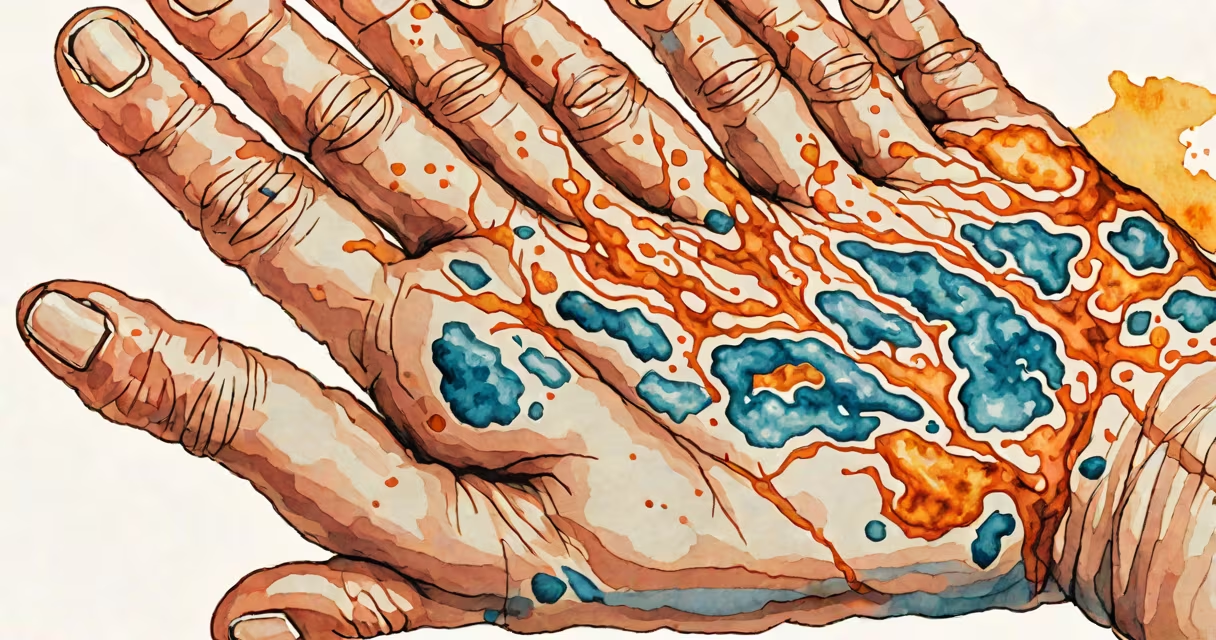
Psoriasis is a chronic autoimmune disease that causes rapid skin cell turnover, resulting in thick, red patches with silvery scales. These symptoms appear most often on the scalp, elbows, knees, and lower back, though they can occur anywhere on the body.
In a healthy immune system, skin cells grow, mature, and shed in a cycle that takes about a month. Psoriasis disrupts this process, causing new skin cells to form and move to the surface in days instead of weeks. The buildup creates raised, inflamed areas called plaques.
| Type | Description | Common Locations |
|---|---|---|
| Plaque | Thick, red patches with silvery-white scales | Scalp, elbows, knees, lower back |
| Guttate | Small, red spots, often triggered by infections | Torso, arms, legs |
| Inverse | Smooth, red lesions in skin folds | Armpits, groin, under breasts |
| Pustular | White pustules surrounded by red skin | Hands, feet, generalized body |
| Erythrodermic | Widespread, fiery redness over most of the body | Entire body |
Many people confuse psoriasis with eczema or fungal infections due to overlapping symptoms. Unlike eczema, psoriasis typically doesn't cause itching unless infected. Psoriasis plaques are also more likely to appear on the outsides of joints rather than in skin folds.
While there's no cure for psoriasis, treatments can reduce symptoms and improve quality of life. Common approaches include:
I've seen patients achieve significant relief through combination therapies tailored to their specific triggers and severity levels. For example, someone with mild plaque psoriasis might use a topical steroid cream alongside UVB phototherapy sessions.
Consult a healthcare provider if you notice persistent red patches, scaling, or joint pain. Early intervention can prevent complications like psoriatic arthritis. Most insurance plans cover psoriasis treatments, but coverage varies by plan and medication type.