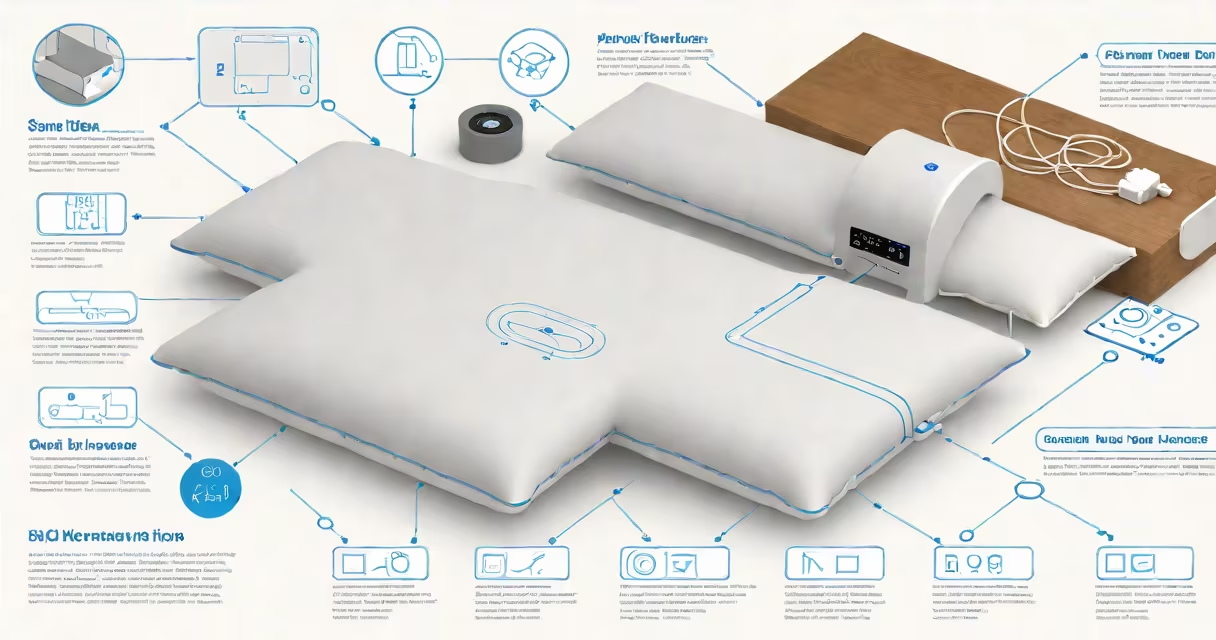
The smart Nora pillow is an anti-snoring device that uses gentle airflow to adjust your sleeping position. It consists of a soft silicone pillow insert placed inside your existing pillow, connected to a small bedside machine that delivers controlled air pulses.
When the pillow's microphone detects snoring sounds, the device responds within seconds by inflating air cells in the pillow. This subtle movement encourages you to roll onto your side, reducing airway obstruction and stopping the snoring. The system resets automatically when breathing returns to normal.
Unlike traditional anti-snoring mouthpieces or nasal strips, the smart Nora pillow doesn't require wearing anything in your mouth or nose. It works by repositioning your head rather than altering your airway physically.
| Component | Function |
|---|---|
| Silicone pillow insert | Fits inside your existing pillow and contains air chambers |
| Bedside control unit | Monitors snoring and controls airflow |
| Microphone sensor | Detects snoring sounds and triggers responses |
The smart Nora pillow is designed for people who snore due to sleeping on their backs. It's particularly useful for those who prefer not to use intrusive devices like CPAP machines or mandibular advancement devices. However, it's not intended for severe sleep apnea cases.
A 2017 study published in the journal Sleep Medicine Reviews found that positional therapy-like what the smart Nora pillow provides-can reduce snoring and mild obstructive sleep apnea in many patients.
Some people confuse the smart Nora pillow with other sleep aids, such as memory foam pillows that claim to reduce snoring. While memory foam can provide better support, it doesn't actively adjust your position like the smart Nora system does.
Another misconception is that the pillow works for all types of snoring. It's most effective for positional snoring, where sleeping on your back causes vibrations in the throat. It may not help if snoring is caused by nasal congestion or other underlying issues.
I tested the smart Nora pillow for two weeks. Initially, I was skeptical about whether air pulses would be noticeable, but they were surprisingly gentle. The first night, the pillow adjusted my position several times, and I woke up feeling more rested than usual. By the second week, I noticed fewer disruptions in my partner's sleep.
The setup was straightforward: I placed the silicone insert inside my existing pillow and connected the control unit to a power outlet. The microphone sensor was sensitive enough to pick up snoring without triggering from other noises in the room.
For those looking for additional solutions, other types of pillows-such as cervical or wedge pillows-can help maintain proper alignment. However, these don't actively respond to snoring like the smart Nora system.
For severe sleep apnea, a doctor may recommend a continuous positive airway pressure (CPAP) machine, which delivers pressurized air through a mask to keep airways open. The smart Nora pillow is not a substitute for medical treatment in these cases.