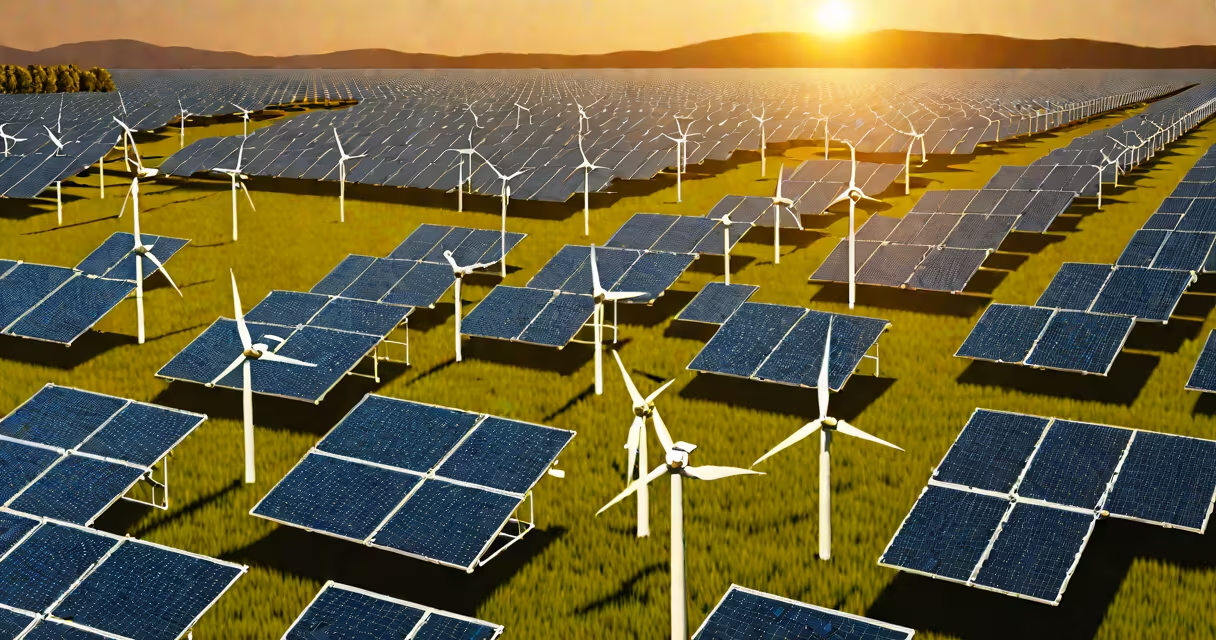
Solar, wind, and hydro power are the three most widely used forms of renewable energy, each harnessing different natural resources to generate electricity without burning fossil fuels.
Solar power converts sunlight into electricity using photovoltaic (PV) panels or concentrating solar power systems. Wind power uses turbines to convert wind energy into electricity. Hydro power generates electricity by capturing the energy from falling or fast-flowing water using turbines and generators.
| Type | Subtypes |
|---|---|
| Solar | Photovoltaic (PV) panels, Concentrated Solar Power (CSP) |
| Wind | Onshore wind farms, Offshore wind farms |
| Hydro | Run-of-the-river, Storage dams, Pumped storage |
Solar power is versatile and can be installed on rooftops or in large solar farms, making it suitable for both urban and rural areas. Wind power requires large, open spaces and is often used in coastal or high-altitude regions where winds are consistent. Hydro power is typically located near rivers or water bodies and is used where water flow is reliable.
One common misconception is that solar power only works in sunny climates. However, solar panels can still generate electricity on cloudy days, though at reduced efficiency. Another myth is that wind turbines are noisy and harmful to wildlife. Modern wind turbines are designed to minimize noise and impact on birds and bats.
Hydro power is sometimes criticized for disrupting ecosystems. While large dams can have significant environmental impacts, smaller run-of-the-river projects have minimal effects on the natural flow of rivers.
Consider a hypothetical scenario where a community needs to choose between solar, wind, and hydro power for a new project. The community has limited space, moderate sunlight, and consistent winds but no nearby rivers. In this case, solar and wind power would be the most feasible options. The community could install solar panels on rooftops and set up a small wind farm on the outskirts of the town. This combination would provide a reliable and sustainable energy source.
According to the National Renewable Energy Laboratory, solar power accounts for about 43% of all new electric generating capacity in the U.S., while wind power makes up around 40%. Hydro power, although established, represents a smaller portion of new capacity due to limited suitable sites for new dams.