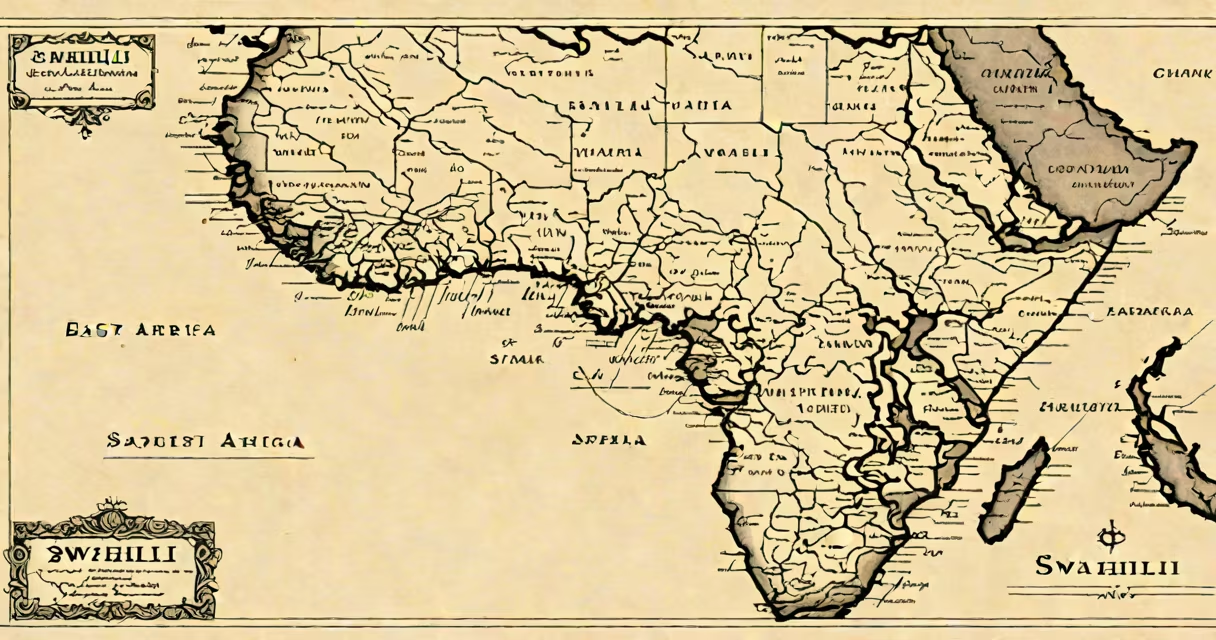
Swahili meaning in English refers to the translation of Swahili words into English, providing insight into East Africa's culture and history. Swahili, a Bantu language with Arabic, Persian, and other influences, is spoken by over 100 million people across East Africa.
Swahili translations adapt words and phrases from Swahili into English while preserving their original meanings. For example, "Jambo" translates to "Hello," and "Asante" means "Thank you." Some Swahili words don't have direct English equivalents, requiring context to convey their full meaning.
| Swahili Word | English Translation | Meaning |
|---|---|---|
| Harambee | Community effort | A collective effort to achieve a common goal, often used in fundraising or community projects. |
| Ujamaa | Familyhood | A concept emphasizing extended family ties and communal living, central to Tanzania's socialist policies in the 1960s. |
| Simba | Lion | Refers to the lion, a symbol of strength and courage in Swahili culture. |
Swahili is widely spoken in Kenya, Tanzania, Uganda, Rwanda, Burundi, Mozambique, and the Democratic Republic of the Congo. It serves as a lingua franca, uniting people from different ethnic backgrounds. Swahili's influence extends beyond East Africa, with communities in the diaspora and academic interest worldwide.
Swahili's rich vocabulary reflects East Africa's diverse cultural heritage. For instance, the word "msikiti" (mosque) highlights the historical influence of Islam in the region. Understanding Swahili meanings in English offers a window into the values, traditions, and history of the people who speak it.
Many assume Swahili is just a dialect or a simplified version of other African languages. However, Swahili is a distinct language with its own grammar, vocabulary, and literary traditions. It's also often confused with being solely a coastal language, but it's widely spoken inland as well.
Another misconception is that Swahili is only spoken by older generations. In reality, it's widely used by all age groups, especially among youth who incorporate Swahili into modern music, social media, and urban culture.
Swahili's global reach extends beyond East Africa. It's one of the official languages of the African Union and is taught in universities worldwide. The language's growing influence is evident in its inclusion in Google Translate and other digital platforms.
For example, the phrase "pole pole" (slowly slowly) is often used to describe a relaxed approach to life, reflecting the Swahili concept of taking time to enjoy the present moment. This phrase has gained popularity globally, symbolizing a mindset of patience and mindfulness.
Understanding Swahili meanings in English fosters cultural appreciation. As the world becomes more interconnected, learning about languages like Swahili helps promote mutual understanding and respect.