Transitional kindergarten (TK) begins at age 4, serving children born between September 2 and April 2 of the school year they enroll. This program offers a developmentally appropriate curriculum for younger students who aren't yet ready for traditional kindergarten.
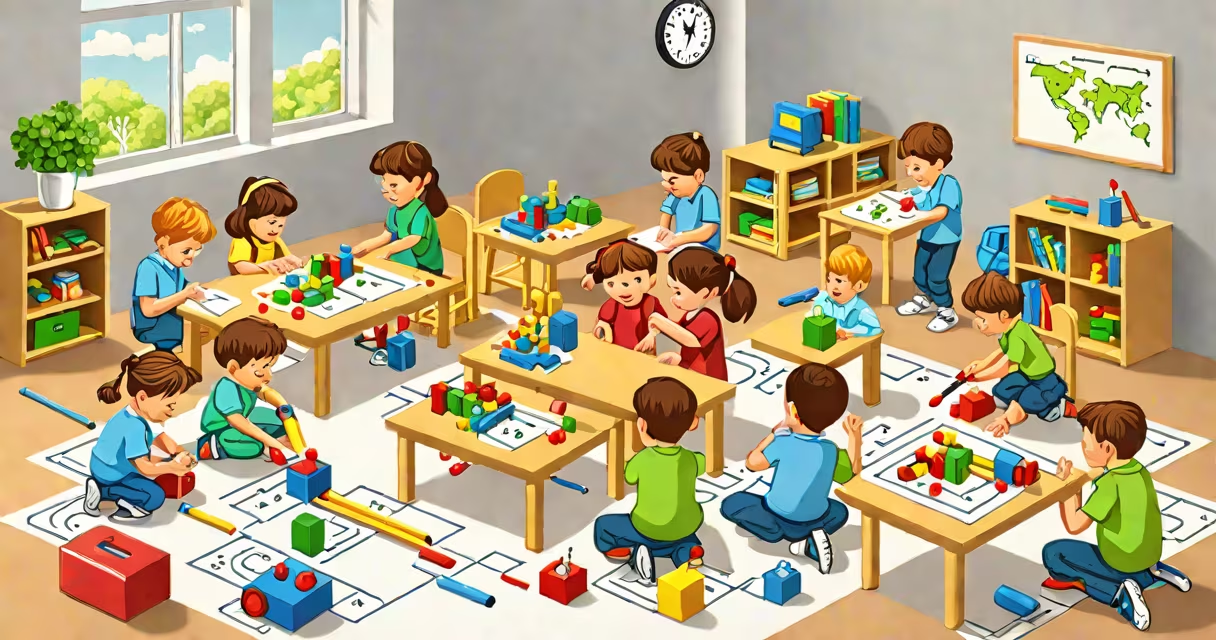
TK operates similarly to traditional kindergarten but with adjusted expectations. The class size is smaller, with a lower student-to-teacher ratio, allowing for more individualized attention. The curriculum focuses on social-emotional learning, early literacy, and foundational math skills through play-based activities.
Students attend TK for one year before moving to regular kindergarten. The program follows the same school calendar and hours as other kindergarten classes in the district.
Most TK programs operate within public schools, following state guidelines. However, some private schools and preschools offer TK-like programs. Here's how they compare:
| Program Type | Age Requirement | Curriculum Focus |
|---|---|---|
| Public School TK | 4 years old | State-mandated standards with play-based learning |
| Private School TK | 4 years old | Similar to public TK but may include additional enrichment |
| Preschool TK | 4 years old | Play-based learning with less structured academics |
Transitional kindergarten is primarily used in California, where it was mandated by state law in 2010. The program addresses the needs of younger students who might otherwise enter kindergarten unprepared. TK provides a structured environment to develop essential skills before transitioning to traditional kindergarten.
Research shows that TK students demonstrate significant gains in language, literacy, and math skills compared to their peers who did not attend TK. The program also helps reduce the achievement gap among students from different socioeconomic backgrounds.
Many people confuse TK with preschool or pre-kindergarten. While all three serve young children, they differ in structure and goals. Preschool is typically for 3- to 4-year-olds and focuses on socialization and basic skills. Pre-kindergarten, often called pre-K, prepares 4- to 5-year-olds for kindergarten with more structured academic activities. TK bridges the gap between preschool and kindergarten, offering a mix of play and structured learning tailored to younger 4-year-olds.
Another misconception is that TK is only for students who struggle academically. In reality, TK benefits all students by providing a supportive environment to develop foundational skills at their own pace. It's not a remedial program but rather an extension of early childhood education.
Consider a child born on February 15. Under California's TK guidelines, this child would be eligible to start TK in the fall of the year they turn 4. They would then attend traditional kindergarten the following year when they turn 5. This staggered approach ensures the child has time to mature and develop the necessary skills before entering kindergarten.
For parents considering TK, it's essential to check local school district guidelines, as some areas may have slightly different age cutoffs or enrollment processes. Some districts allow parents to apply for a waiver if their child's birthday falls just outside the eligibility window.
Transitional kindergarten starts at age 4, offering a valuable stepping stone between preschool and traditional kindergarten. By providing a structured yet flexible learning environment, TK helps young students build confidence and foundational skills for future academic success.