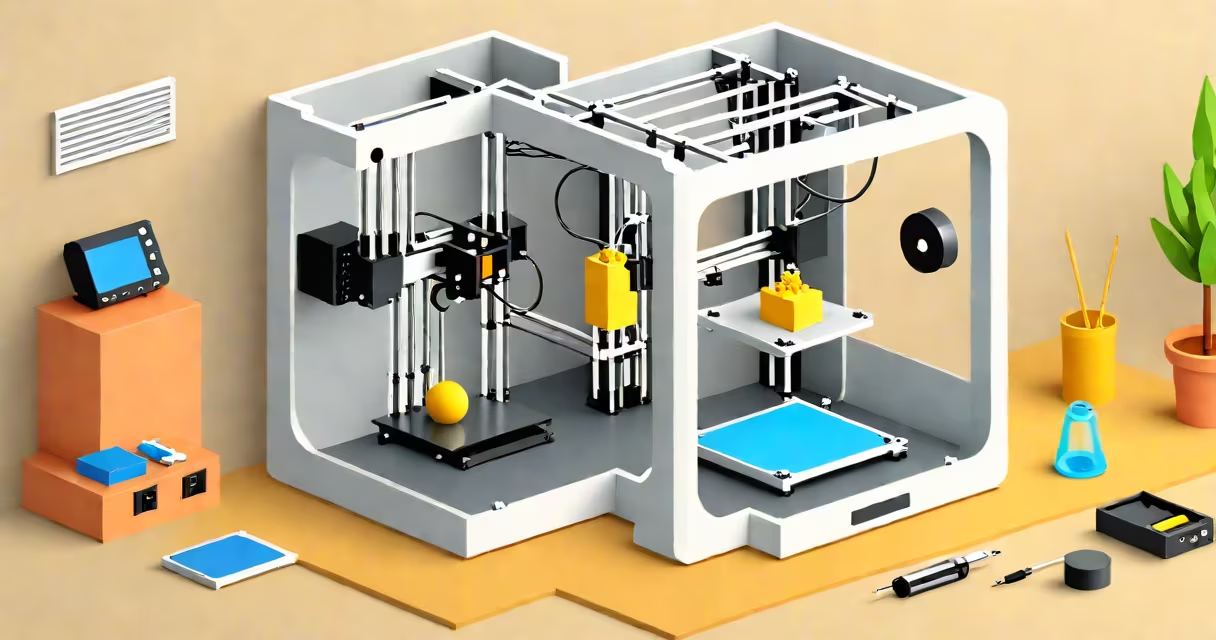
A 3D printer is a machine composed of mechanical parts, electronics, and often a heated extruder, all working together to create three-dimensional objects from digital files. These printers use materials like plastic filament, metal powders, or liquid resins to build objects layer by layer.
While designs vary, most 3D printers share several key components:
The materials used in 3D printing vary by type. Here are the most common:
| Material Type | Common Uses | Examples |
|---|---|---|
| Plastic Filament | Prototyping, hobbyist projects, consumer goods | PLA, ABS, PETG |
| Metal Powders | Industrial parts, aerospace components | Stainless steel, titanium, aluminum |
| Resins | High-detail models, dental applications | Standard, flexible, castable resins |
Most 3D printers follow a process called additive manufacturing. They start with a digital model sliced into thin layers. The printer then deposits material layer by layer until the object is complete. For example, a plastic filament printer melts the material and extrudes it through a nozzle, building the object on the print bed.
Many people assume all 3D printers use the same materials. However, different types of 3D printers use different materials. For instance, FDM printers primarily use plastic filaments, while SLA printers use liquid resins. Metal 3D printers, often used in industrial settings, use metal powders.
I once built a small plastic filament 3D printer from a kit. The frame was made of aluminum, the extruder was brass, and the print bed had a heated glass surface. Assembling it gave me a hands-on understanding of how these components work together to create objects.
The choice of material affects the strength, flexibility, and finish of the printed object. For example, PLA is easy to print but brittle, while ABS is more durable but requires a heated print bed. Resins offer high detail but can be brittle unless post-processed.
Researchers are developing new materials for 3D printing, including biodegradable plastics and advanced composites. These innovations aim to improve sustainability and performance in various industries.