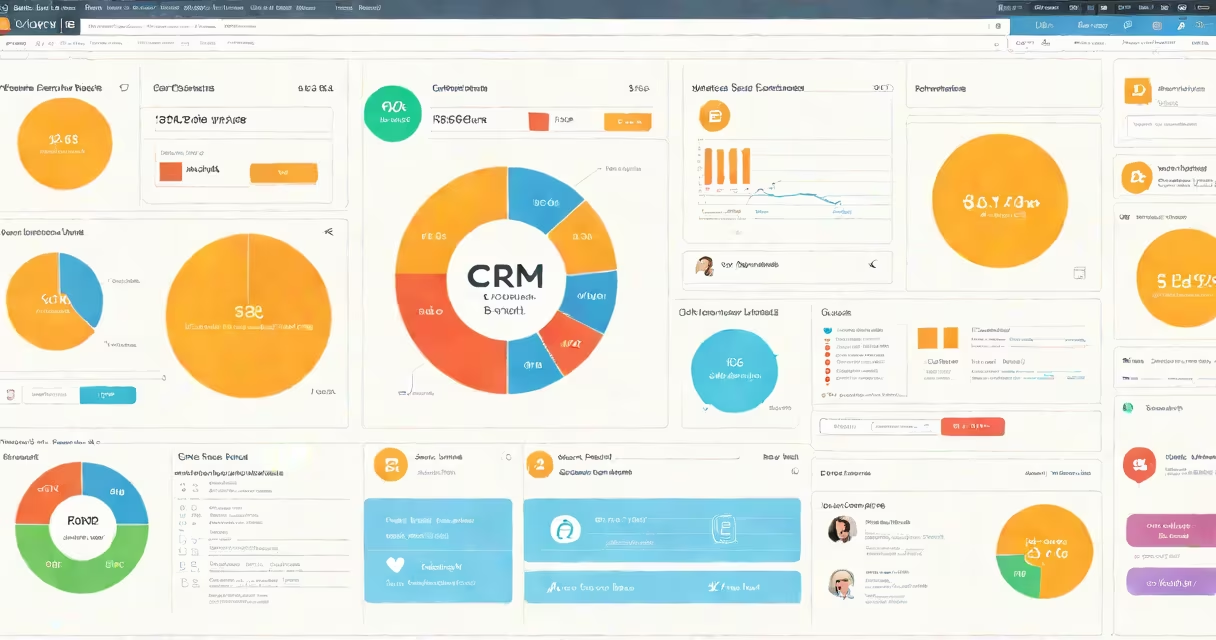
Customer relationship management (CRM) systems are software platforms that help businesses manage customer interactions, sales, and support. They centralize customer data, automate workflows, and track performance metrics.
CRM systems collect data from various touchpoints, such as emails, calls, and social media, to create a unified customer profile. This data helps businesses personalize communications, predict customer needs, and improve service quality.
For example, a sales team might use a CRM to log calls, schedule follow-ups, and track deals. The system then analyzes this data to identify patterns and suggest the best actions for closing sales.
| Type | Description | Example |
|---|---|---|
| Operational CRM | Focuses on automating business processes like sales, marketing, and service. | Salesforce |
| Analytical CRM | Analyzes customer data to provide insights and improve decision-making. | HubSpot |
| Collaborative CRM | Enhances communication and collaboration between different departments. | Zoho CRM |
Most CRM systems include features like contact management, lead tracking, email integration, and reporting tools. Advanced systems may also offer AI-driven insights, predictive analytics, and customizable dashboards.
For instance, Salesforce's Einstein AI can predict customer behavior and suggest actions to improve engagement. HubSpot's CRM provides a free version with basic features, making it accessible for small businesses.
While CRM systems focus on customer relationships, enterprise resource planning (ERP) systems manage internal business processes like finance, supply chain, and human resources. Some businesses use both CRM and ERP systems to simplify operations and improve efficiency.
For example, a company might use a CRM to manage customer interactions and an ERP system to handle inventory and accounting. Integrating these systems can provide a complete view of the business.
To learn more about ERP systems, see this guide.
When selecting a CRM system, consider factors like scalability, ease of use, integration capabilities, and pricing. Businesses should also evaluate their specific needs, such as industry-specific features or mobile access.
For example, a small business might prioritize affordability and simplicity, while a large enterprise might need advanced analytics and customization options. Testing different platforms through free trials can help businesses make an informed decision.