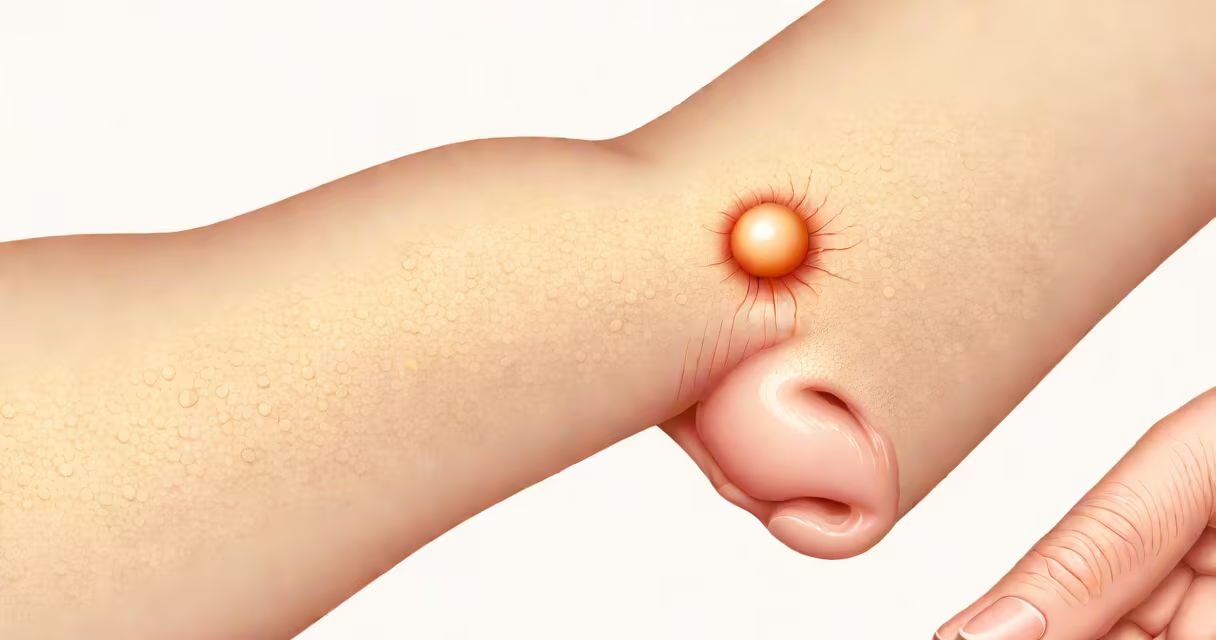
Cysts under the skin are closed pockets of tissue that can be filled with fluid, pus, or other material. They form beneath the surface of the skin and are usually noncancerous.
Most skin cysts develop when keratin-a protein that makes up hair and skin-becomes trapped beneath the skin's surface. This typically happens due to clogged pores, skin trauma, or inflammation. Over time, the trapped material forms a sac-like structure. Some cysts are present at birth, while others develop later in life.
Skin cysts come in different forms, each with distinct causes and characteristics. The most common types include:
| Type | Description | Common Location |
|---|---|---|
| Sebaceous Cyst | Filled with sebum (oil) and often linked to blocked oil glands | Face, neck, back |
| Epidermal Cyst | Contains keratin and forms due to trapped skin cells | Anywhere on the body |
| Pilar Cyst | Linked to hair follicles and often runs in families | Scalp |
| Ganglion Cyst | Fluid-filled and often related to joints or tendons | Hands, wrists |
Cysts form due to various factors, including clogged pores, minor skin injuries, or genetic predispositions. For example, sebaceous cysts often develop when oil-producing glands become blocked. Epidermal cysts may form after skin trauma, such as a surgical incision or an injury that penetrates the skin. Some people are more prone to cysts due to genetic factors.
Most skin cysts are harmless and may resolve on their own. However, seek medical attention if a cyst becomes painful, grows rapidly, or shows signs of infection, such as redness, swelling, or pus. A dermatologist can diagnose the type of cyst and recommend treatment options, which may include drainage, medication, or surgical removal.
I once noticed a small, painless bump on my back that gradually grew over several weeks. After consulting a dermatologist, it was identified as a sebaceous cyst. The doctor recommended leaving it alone unless it became bothersome. Understanding the nature of skin cysts helped me avoid unnecessary worry.