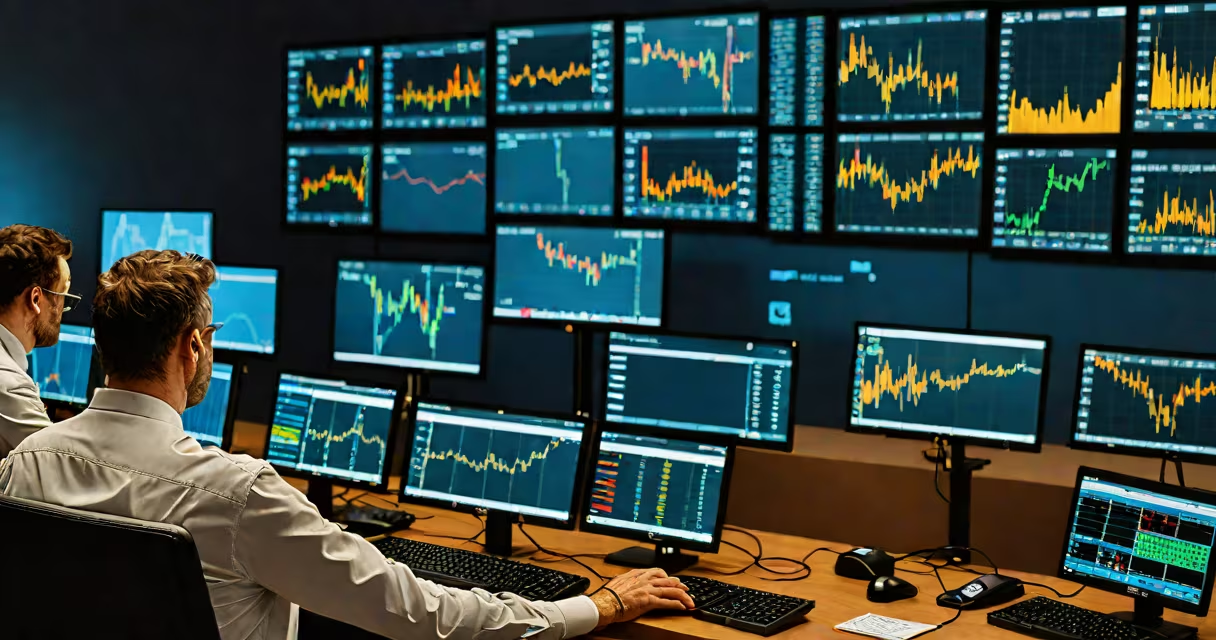
A commodities market trades raw materials or primary agricultural products, including energy resources like oil and metals such as gold, alongside financial instruments like futures contracts. These markets enable buyers and sellers to manage price risks and speculate on price movements.
Commodities trading involves buying and selling standardized contracts representing quantities of specific commodities. Most transactions occur through futures exchanges, where participants agree to buy or sell a commodity at a predetermined price and date. The Chicago Mercantile Exchange (CME) and Intercontinental Exchange (ICE) are major platforms for these trades.
Traders use commodities markets to hedge against price volatility or profit from anticipated price changes. For example, an airline might buy jet fuel futures to lock in prices and avoid unexpected cost increases. Similarly, farmers might sell grain futures to secure a price for their harvest before planting.
| Category | Examples |
|---|---|
| Energy | Crude oil, natural gas, gasoline, heating oil |
| Metals | Gold, silver, copper, platinum |
| Agricultural | Corn, wheat, soybeans, coffee, cocoa |
| Livestock and Meat | Lean hogs, live cattle, feeder cattle |
| Soft Commodities | Cotton, sugar, orange juice |
While physical commodities are tradable, most transactions involve financial derivatives like futures and options. Futures contracts commit traders to buy or sell a commodity at a future date, while options give the right but not the obligation to do so.
For instance, a trader might buy a gold futures contract expecting prices to rise. If the price increases, they can sell the contract for a profit without taking physical delivery of the gold. This financial aspect makes commodities markets accessible to a broader range of participants, including individual investors.
Many people confuse commodities trading with stock trading. Unlike stocks, which represent ownership in a company, commodities are tangible assets or financial instruments based on those assets., commodities markets operate globally, with prices influenced by factors like weather, geopolitical events, and supply chain disruptions.
Another misconception is that only large institutions trade commodities. While industrial users like manufacturers and airlines do participate, individual investors can also trade commodities through brokerage accounts or exchange-traded funds (ETFs).
In early 2020, the COVID-19 pandemic caused a significant drop in demand for oil. Traders who had bought oil futures contracts faced the risk of negative prices, meaning they would pay to sell their contracts. This new event highlighted the risks and complexities of commodities trading.
As someone who has followed commodities markets closely, I've observed how quickly external factors can impact prices. For example, geopolitical tensions in the Middle East can cause sudden spikes in oil prices, affecting everything from transportation costs to consumer goods.