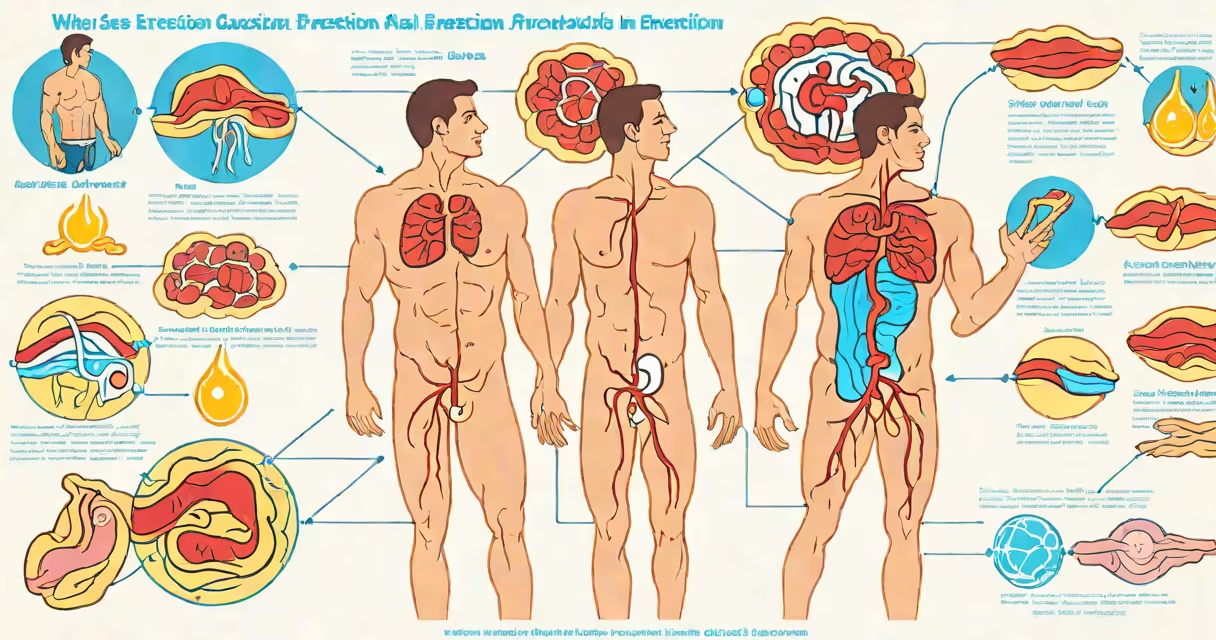
Male erection occurs when blood fills two chambers in the penis called the corpora cavernosa, triggered by physical or psychological stimulation. This process involves increased blood flow, relaxation of smooth muscles, and the release of nitric oxide.
The penis contains spongy tissue with smooth muscles, fibrous tissues, veins, and arteries. An erection begins with sensory or mental stimulation, which sends signals from the brain to nerves in the penis. These nerves release nitric oxide, causing the smooth muscles in the penis to relax. This relaxation allows blood to flow into the corpora cavernosa, filling the penis and making it firm.
Erections can be classified into several types based on their triggers:
| Type | Trigger | Duration |
|---|---|---|
| Reflexive Erection | Physical touch to the penis | Short-term |
| Psychogenic Erection | Sexual thoughts or fantasies | Variable |
| Nocturnal Erection | Unconscious during sleep, often linked to rapid eye movement (REM) cycles | Temporary |
Many people believe that erections are solely controlled by sexual thoughts or physical touch. However, they are also influenced by hormonal levels, particularly testosterone., erections can occur without sexual arousal, such as during sleep or due to medical conditions like priapism, a prolonged erection unrelated to sexual stimulation.
Several factors can influence the ability to achieve and maintain an erection, including:
Nitric oxide is important for the erection process. When released, it triggers the production of cyclic guanosine monophosphate (cGMP), which further relaxes the smooth muscles and increases blood flow. This entire process is reversible, allowing the penis to return to its flaccid state once the stimulation ceases.
I once observed this process firsthand during a medical demonstration. The presenter used a model to show how blood flows into the corpora cavernosa, causing the penis to become erect. This visual aid helped clarify the complex physiological steps involved.
Erections in males are a result of a well-coordinated sequence of nervous system signals, hormone levels, and blood flow. Understanding the underlying mechanisms can help in maintaining sexual health and addressing any issues that may arise.