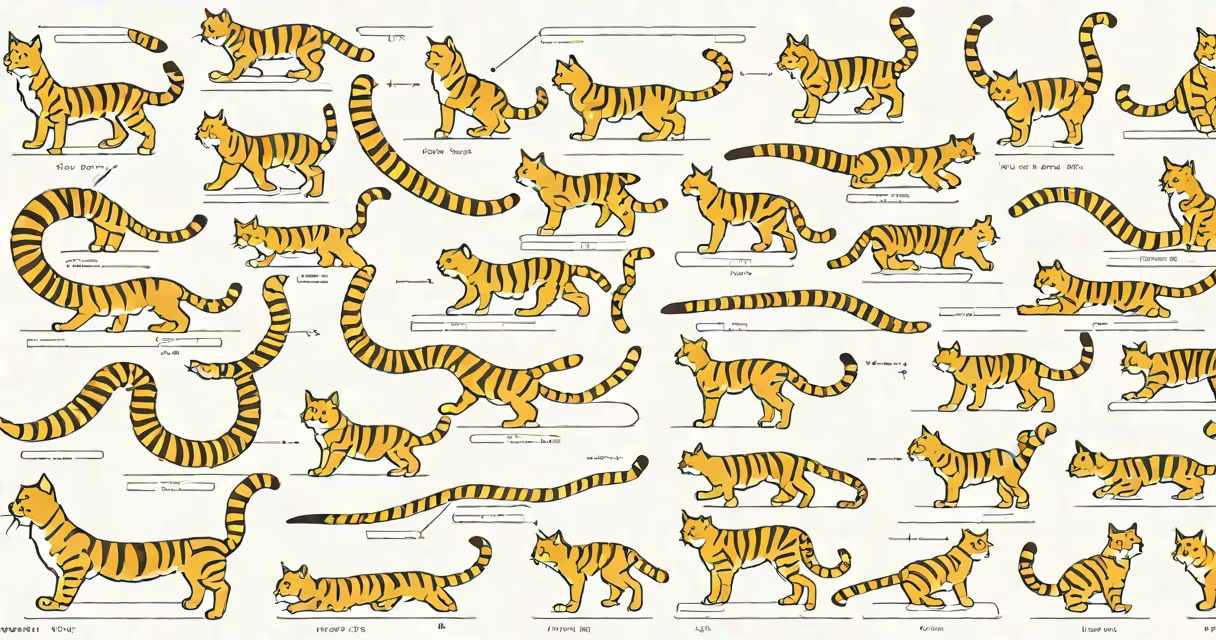
Cat tail flicks are rapid, short movements that communicate your cat's mood and intentions. These subtle signals reveal whether your cat is happy, agitated, or focused.
Cats use their tails as a form of nonverbal communication. Tail flicks are quick, deliberate movements that differ from the slow, sweeping motions cats make when relaxed. Research from the University of California, Berkeley shows that cats use tail movements to signal everything.
Cat tail flicks can be categorized into several distinct types, each with its own meaning:
| Type of Flick | Description | Meaning |
|---|---|---|
| Quick Flick | A rapid, single movement of the tail | Curiosity or mild interest |
| Repeated Flicks | Multiple quick flicks in succession | Agitation or annoyance |
| Slow Flick | A deliberate, slower movement | Focused attention or decision-making |
Cats flick their tails in various situations, often as a response to their environment or interactions. For example, a cat might flick its tail when observing prey or when annoyed by another pet. According to the American Society for the Prevention of Cruelty to Animals (ASPCA), understanding these signals can help prevent misunderstandings between cats and their owners.
Many people assume that all tail flicks indicate anger or frustration. However, this is not always the case. A single flick might simply signal curiosity, while repeated flicks are more likely to indicate irritation., some cats may flick their tails when they are in pain or discomfort, which is often misunderstood as mere annoyance.
I once observed my own cat flicking his tail rapidly while sitting near the window. At first, I thought he was upset, but upon closer inspection, I realized he was intently watching birds outside. This experience highlighted the importance of considering the context when interpreting tail flicks.
Understanding cat tail flicks can improve communication between you and your feline friend. If you notice repeated flicks, it might be best to give your cat some space. However, a single flick could be an invitation to engage in play or interaction. Paying attention to these signals can strengthen your bond with your cat.