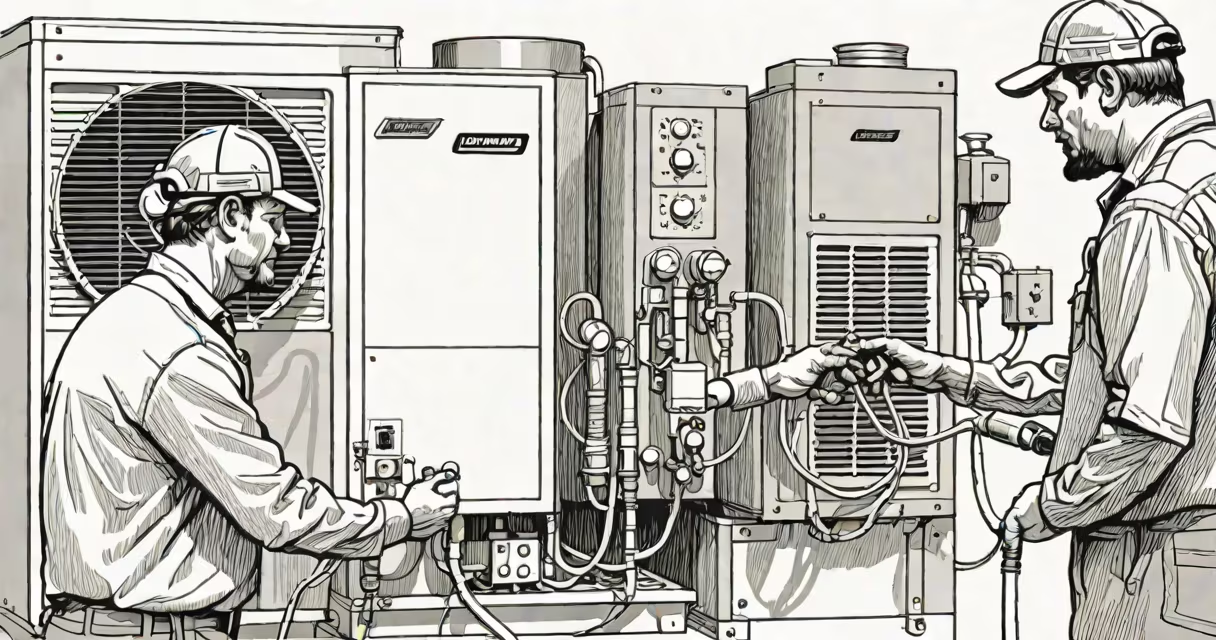
HVAC technicians install, maintain, and repair heating, ventilation, and air conditioning systems to control indoor climate and air quality. Their work ensures comfortable temperatures, clean air circulation, and energy efficiency in homes and businesses.
HVAC technicians perform a range of tasks focused on system installation, maintenance, and repair. They read blueprints, design layouts for HVAC systems, and install components like ducts, pipes, and wiring. Maintenance involves regular inspections, filter changes, and system tune-ups to prevent breakdowns. When issues arise, technicians diagnose problems using tools like manometers and thermal imaging cameras, then repair or replace faulty parts.
| Type | Description | Example Task |
|---|---|---|
| Installation | Setting up new HVAC systems | Installing a ductless mini-split system in a home |
| Maintenance | Routine checks and servicing | Cleaning evaporator coils in a commercial building |
| Repair | Fixing malfunctions | Replacing a faulty compressor in an air conditioner |
HVAC technicians work in various settings, including residential homes, commercial buildings, factories, and power plants. Residential technicians focus on heating and cooling systems in houses and apartments. Commercial technicians handle larger systems in offices, schools, and hospitals. Industrial technicians maintain complex systems in factories and power plants, often working with specialized equipment like refrigeration units.
As an HVAC technician, my typical day starts with checking schedules and responding to service calls. One morning, I arrived at a home where the air conditioning wasn't cooling properly. After diagnosing the issue, I discovered a refrigerant leak. I repaired the leak, recharged the system, and ensured it was running efficiently. Later, I performed routine maintenance on a commercial HVAC system in an office building, cleaning filters and checking for potential issues. Each day brings different challenges, from emergency repairs to planned installations.
HVAC technicians need technical skills, problem-solving abilities, and physical stamina. They must understand mechanical systems, electrical components, and refrigerants. Certification from organizations like EPA Section 608 is often required for handling refrigerants. Many technicians complete formal training programs or apprenticeships, which combine classroom learning with hands-on experience.
HVAC work can be physically demanding, involving crawling into tight spaces and lifting heavy equipment. However, it offers job satisfaction through solving complex problems and improving comfort for clients. The field also provides opportunities for advancement, such as becoming a supervisor or starting an HVAC business.