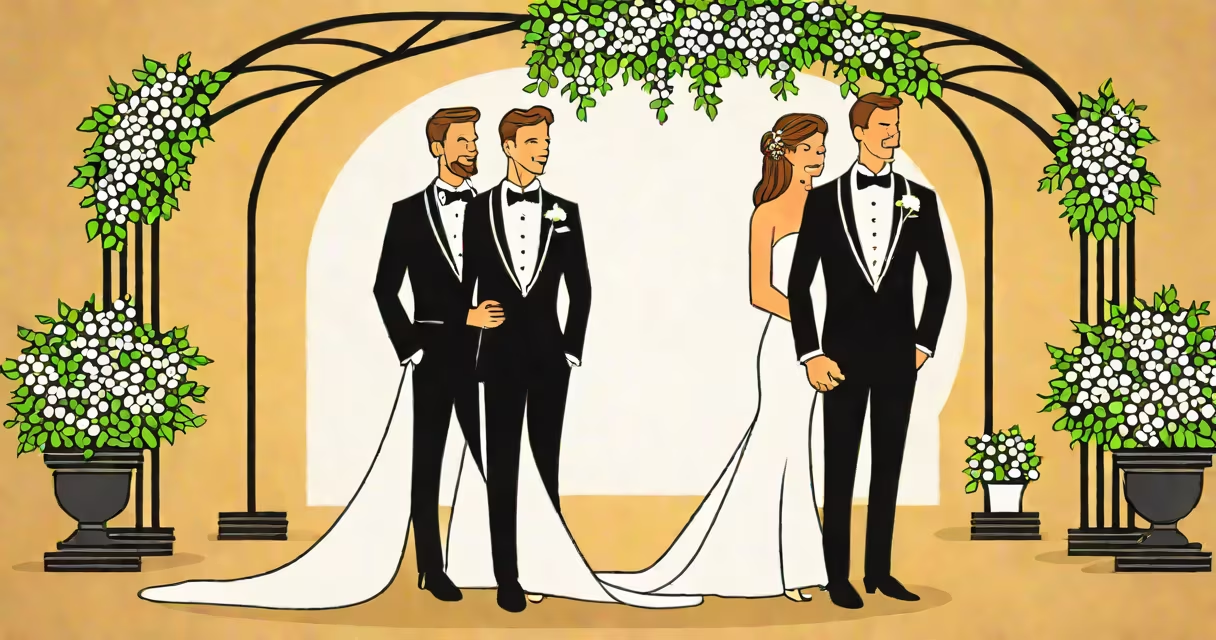
A groom typically wears a suit or tuxedo to match the formality of the wedding, with colors ranging from classic black to lighter shades for daytime events. The choice depends on venue, season, and cultural traditions.
Wedding formality dictates the groom's attire. Black-tie events call for a tuxedo, while casual weddings may allow a linen suit. The dress code on invitations (e.g., "black tie," "beach casual") sets expectations. For example, a black-tie optional event might see some grooms in dark suits with bow ties.
| Occasion | Attire | Key Features |
|---|---|---|
| Black-tie | Tuxedo | Black or midnight blue, satin lapels, black bow tie |
| Formal | Dark suit | Navy or charcoal, optional vest, tie or bow tie |
| Semi-formal | Lighter suit | Gray, beige, or pastel, optional pocket square |
| Casual | Khakis or chinos | Button-down shirt, loafers, optional blazer |
Many assume grooms must always wear a tuxedo, but this is only true for black-tie events. A well-tailored suit often works better for daytime or outdoor weddings. Another myth is that grooms must match bridesmaid colors-this is unnecessary unless specified by the couple.
Cultural traditions influence groom attire. In Indian weddings, grooms may wear a sherwani or kurta-pajama, often in rich fabrics like silk or brocade. Scottish grooms might don a kilt with a sporran and ghillie brogues. These outfits reflect heritage and personal style.