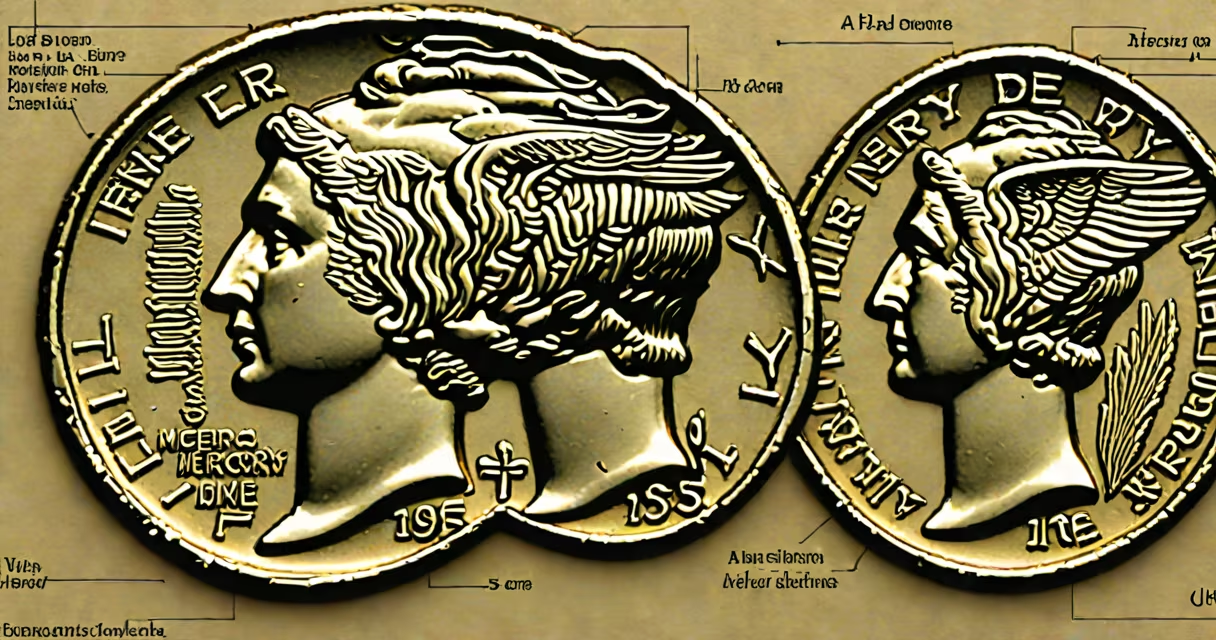
The mercury dime is a US ten-cent piece minted, featuring Winged Liberty's left-facing profile with a cap and wings on the obverse and a fasces with an olive branch on the reverse.
The obverse shows Liberty wearing a Phrygian cap with a wing attached, symbolizing freedom. The word "LIBERTY" curves along the top edge, with the date below. The reverse displays a fasces (bundle of rods) tied with ribbons and an olive branch, representing strength and peace.
Despite its nickname, the dime doesn't depict Mercury, the Roman messenger god. Instead, it represents Liberty. The winged cap was a common symbol of freedom in ancient Rome, often associated with Mercury but not exclusive to him.
The mercury dime is composed of 90% silver and 10% copper, weighing 2.5 grams and measuring 17.9 millimeters in diameter. Its thin profile and high silver content make it a prized collectible. For comparison, a modern US dime is thicker but made of copper-nickel clad.
| Year | Mint Mark | Notes |
|---|---|---|
| 1916-1945 | Philadelphia (none), Denver (D), San Francisco (S) | 1942-1945 dimes have the largest mintages (over 100 million each). |
Mercury dimes range from $2 to $500+, depending on condition and rarity. A 1916-D in pristine condition sold for $345,000 at auction. Most collectors pay $5-$20 for well-worn examples. The US Mint sold 222 million during its production run.
I once found a 1940-S mercury dime in pocket change-it had minor wear but still graded "Good." Even in lower conditions, these coins hold value due to their silver content and historical significance.