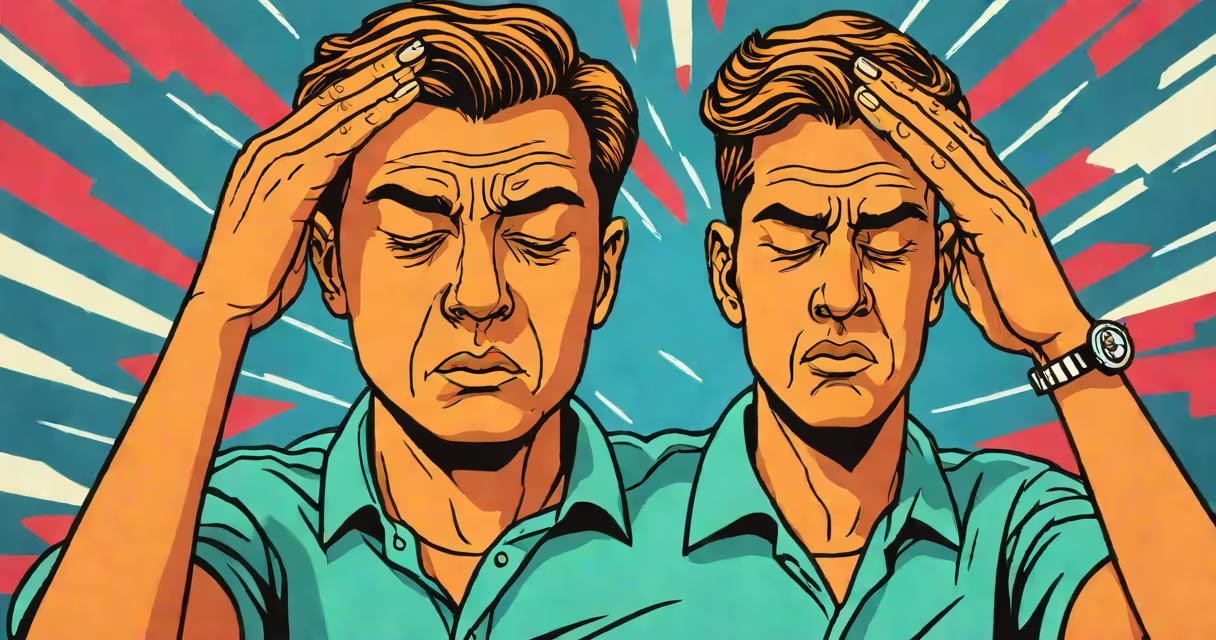
Anxiety headaches typically feel like constant pressure or tightness around the forehead, temples, or back of the head, often described as wearing a too-tight hat. Unlike migraines, they rarely involve throbbing pain or nausea.
Anxiety headaches are usually bilateral (affecting both sides of the head) and have a dull, aching quality. They're classified as tension-type headaches, which account for about 80% of all headaches according to the International Headache Society. The pain is often mild to moderate and doesn't worsen with routine physical activity.
People describe anxiety headaches as:
Anxiety headaches stem from muscle tension caused by stress. When anxious, people subconsciously tighten their neck, jaw, and scalp muscles. This chronic tension restricts blood flow and irritates nerves, triggering pain.
Common triggers include:
For some, even positive events like weddings or promotions can trigger these headaches due to performance anxiety.
While most anxiety headaches are harmless, consult a doctor if:
Over-the-counter pain relievers like ibuprofen or acetaminophen can help, but addressing the root cause is key. Stress-reduction techniques include:
I've found that 10 minutes of guided meditation before bed reduces my anxiety headaches by about 60%. The American Psychological Association recommends at least 30 minutes of daily physical activity to lower stress levels.