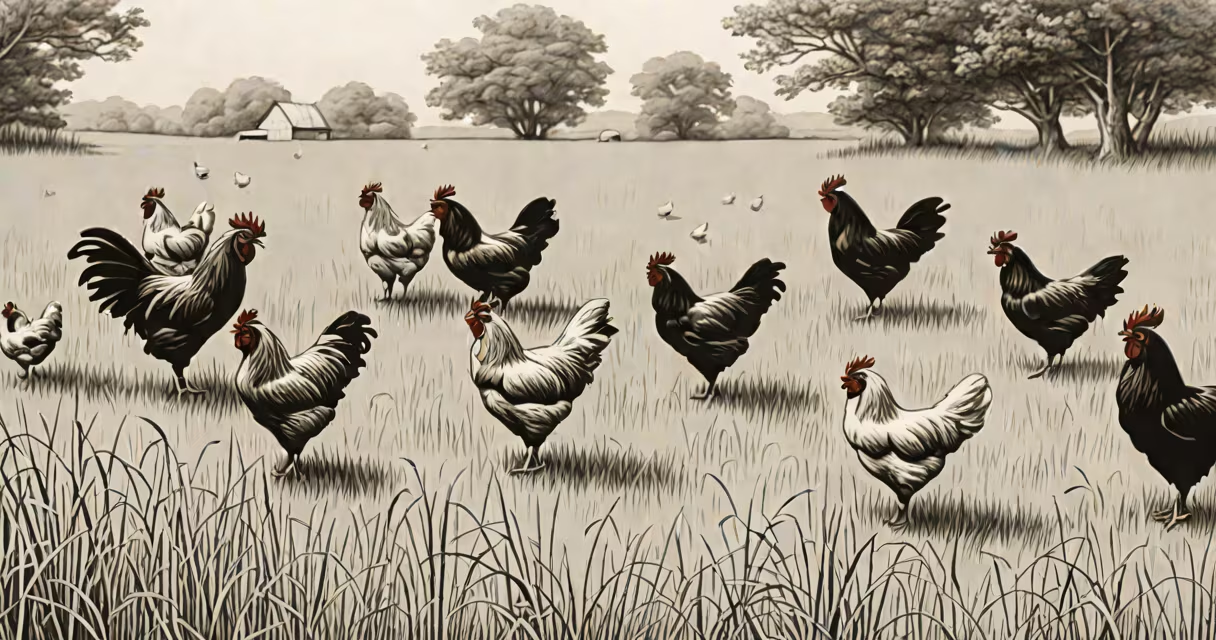
Free range means animals raised for food have access to the outdoors, though the USDA allows exceptions. The label applies to eggs, poultry, and some meats.
The USDA defines "free range" as providing animals with "continuous, free access to the outdoors." However, the agency permits exceptions during extreme weather or when local regulations prohibit outdoor access. This means chickens might spend most of their lives indoors despite the label.
For eggs, the USDA requires hens to have outdoor access, but the space doesn't need to include vegetation or sunlight. For poultry, the term applies to birds slaughtered under federal inspection.
| Type | Outdoor Access | Space Requirements |
|---|---|---|
| Pasture-raised | Full-time outdoor access | 108 square feet per bird |
| Free-range | Access to outdoors | 2 square feet per bird |
| Cage-free | None | 1 square foot per bird |
Consumers often choose free-range products for perceived animal welfare benefits. However, the USDA's loose standards mean free-range eggs and meat may not differ from conventional options. Some farms use the label to charge premium prices without meeting stricter welfare standards.
Many assume free-range means animals spend most of their time outdoors. In reality, most free-range chickens live indoors, with limited outdoor access. The label doesn't guarantee better living conditions or higher-quality products.
I visited a farm labeled "free-range" that had a small outdoor area for 500 chickens. Most birds stayed inside due to the small outdoor space and lack of shade. The farm met USDA standards but didn't provide the idyllic outdoor life consumers might expect.
Look for third-party certifications like Certified Humane or Animal Welfare Approved by AGW. These labels often have stricter standards than the USDA's free-range definition. Research farms directly or ask retailers about their sourcing practices.