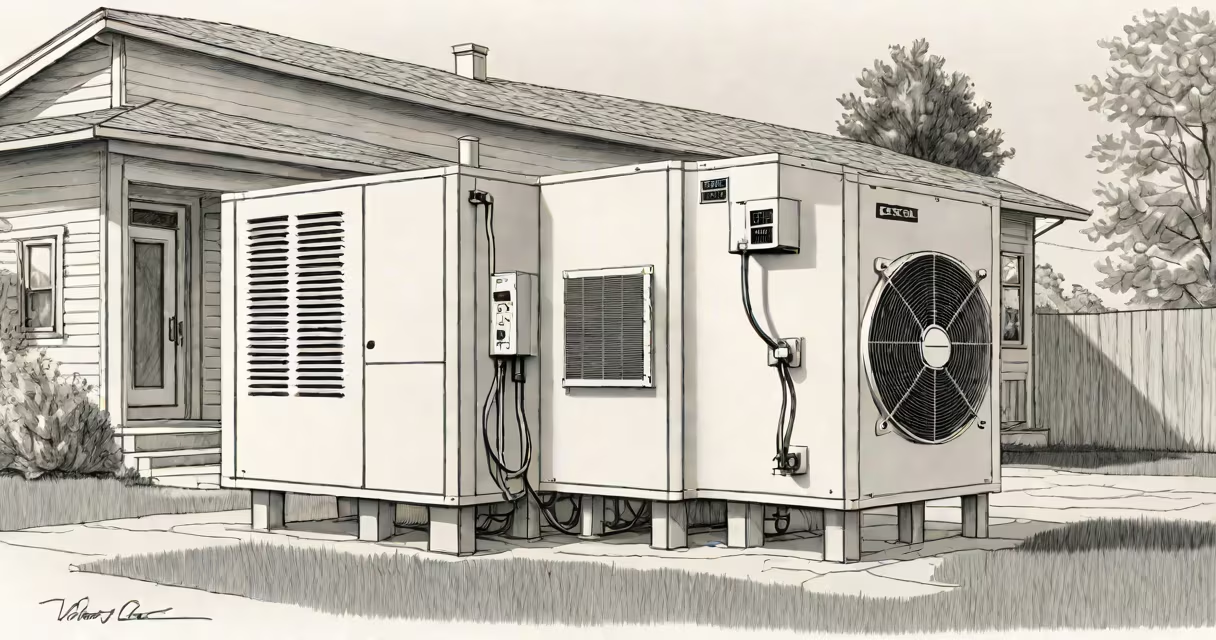
HVACR stands for heating, ventilation, air conditioning, and refrigeration - four technologies that control indoor environments. These systems regulate temperature, humidity, and air quality in homes, offices, and industrial spaces.
The term originated in the early 20th century as these technologies became widespread. The U.S. Department of Energy notes that HVACR systems account for about half of a commercial building's energy use, making them critical for efficiency and comfort.
HVACR systems function through interconnected components:
For example, a residential HVACR system might use a furnace to heat air, which then travels through ducts (ventilation) before passing through an air conditioner in summer. Supermarkets rely on refrigeration units that operate on the same principles as air conditioners.
| System Type | Primary Use | Key Components |
|---|---|---|
| Split Systems | Residential homes | Outdoor condenser, indoor evaporator coil |
| Packaged Systems | Small businesses | Single-unit heater/air conditioner |
| Ductless Mini-Splits | Add-on rooms | Wall-mounted indoor unit, outdoor compressor |
| VRF Systems | Large commercial spaces | Multiple indoor units, single outdoor unit |
Many confuse HVACR with HVAC, omitting the "R" for refrigeration. While HVAC focuses solely on building climate control, HVACR extends to food preservation and industrial cooling. Refrigeration accounts for 10% of global electricity consumption according to the International Energy Agency.
I once helped install a commercial HVACR system where the refrigeration component alone required specialized certification due to its complexity. The system cooled both the building and a separate walk-in freezer.
Beyond comfort, HVACR systems impact health, productivity, and energy efficiency. Proper ventilation removes airborne contaminants like radon and volatile organic compounds. The EPA estimates poor indoor air quality contributes to millions of asthma cases annually.
Modern systems incorporate smart thermostats and variable-speed motors, reducing energy use by up to 30%. Some HVACR technicians specialize in retrofitting older systems with these upgrades, a growing field as buildings seek efficiency improvements.