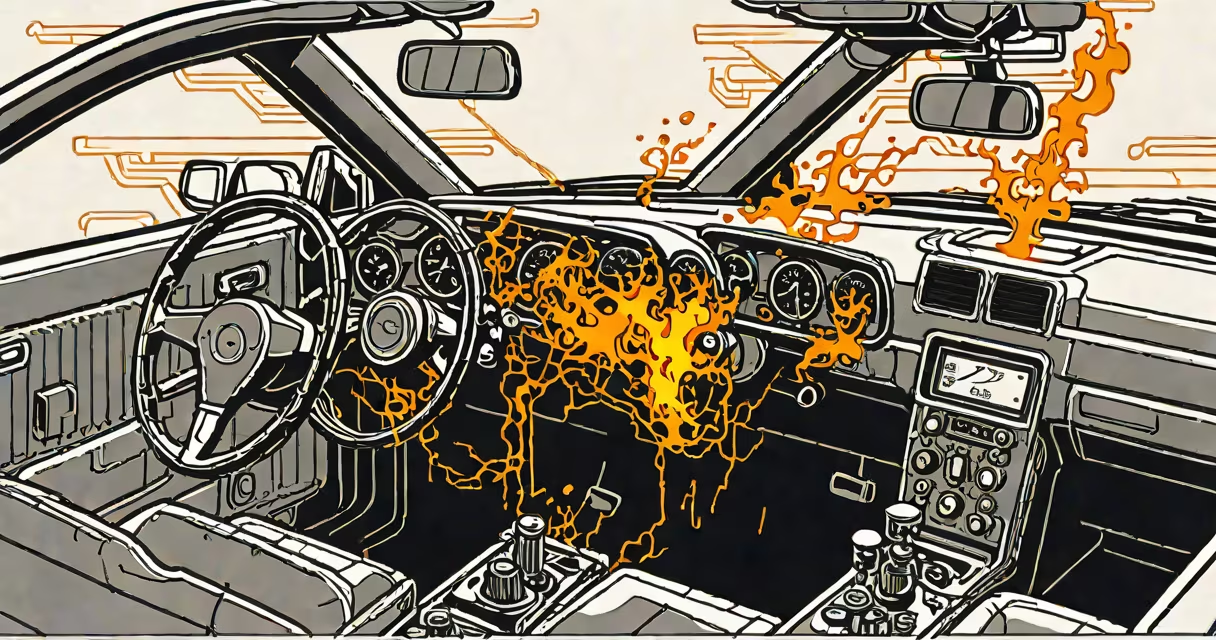
When a car overheats, its engine temperature rises above the safe operating range, typically over 240°F (116°C). This triggers the dashboard warning light and can cause severe damage if ignored.
A car's cooling system circulates coolant through the engine, absorbing heat and carrying it to the radiator. The radiator then cools the fluid before it returns to the engine. A water pump, thermostat, and fan support this process.
Overheating often results from low coolant levels, leaks, or a malfunctioning thermostat. Other causes include a failing water pump, clogged radiator, or broken fan. Extreme weather or heavy loads can also contribute.
| Cause | Symptoms | Solution |
|---|---|---|
| Low coolant | Steam from under the hood, high temperature gauge | Refill coolant and check for leaks |
| Malfunctioning thermostat | Fluctuating temperature gauge | Replace the thermostat |
| Clogged radiator | Overheating even with full coolant | Flush and clean the radiator |
Prolonged overheating can warp the cylinder head, crack the engine block, or blow a head gasket. These repairs are costly, often exceeding $1,000. Immediate action prevents permanent damage.
Pull over safely, turn off the engine, and let it cool for 15 minutes. Check the coolant level and top it off if needed. Inspect for visible leaks. If the issue persists, call a mechanic or roadside assistance.
I once drove a car with a minor coolant leak, ignoring the warning signs. The engine overheated on the highway, forcing an emergency tow. The repair cost $800-a lesson in addressing issues early.
Overheating is a serious warning sign. Address it immediately to avoid costly repairs and ensure your car runs smoothly.