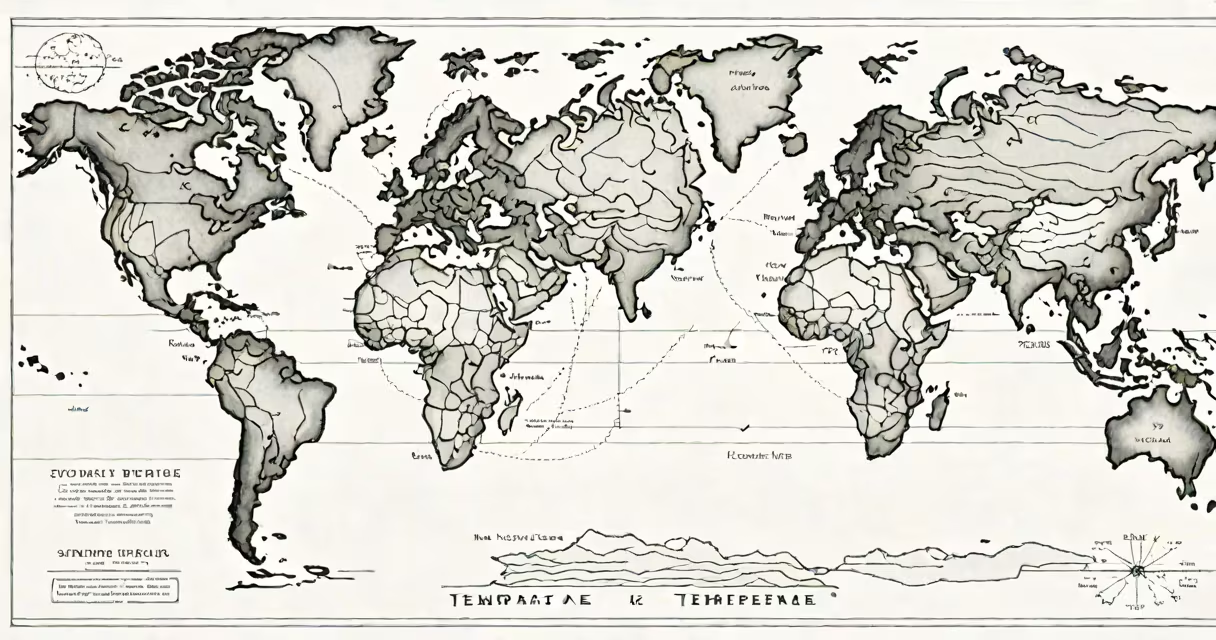
Temperate describes climates with moderate temperatures, distinct seasons, and ample rainfall. These regions lie between tropical and polar areas, typically between 23° and 66° latitude.
Temperate zones experience warm summers and cool winters due to Earth's axial tilt. Unlike tropical regions, they don't have consistent high temperatures year-round. Nor do they have the extreme cold of polar areas.
Rainfall patterns vary. Some temperate regions get steady precipitation. Others have dry summers or wet winters. The Mediterranean climate, for example, has dry summers and wet winters.
| Type | Temperature Range | Precipitation Pattern | Examples |
|---|---|---|---|
| Humid subtropical | Hot summers, mild winters | High year-round | Atlanta, Georgia; Shanghai, China |
| Marine west coast | Cool summers, mild winters | Moderate year-round | Seattle, Washington; London, UK |
| Mediterranean | Hot, dry summers; mild, wet winters | Winter rainfall | Los Angeles, California; Rome, Italy |
| Humid continental | Hot summers, cold winters | Moderate year-round | New York City, New York; Berlin, Germany |
Temperate zones appear on every continent except Antarctica. They cover about 25% of Earth's surface. Notable examples include:
People often confuse temperate with "mild" in all aspects. However, some temperate regions experience significant seasonal variation. For instance, Chicago has a humid continental climate with hot summers and cold winters.
Another mistake is assuming all temperate regions have similar ecosystems. While some share deciduous forests, others have grasslands or shrublands. The chaparral of California differs greatly from the deciduous forests of Japan.
I once visited the Mediterranean region of Spain in summer. The heat was intense, contradicting the common perception of temperate climates as always mild. This experience highlighted the importance of understanding specific climate subtypes.
Temperate climates differ from tropical ones, which are consistently warm year-round. They also contrast with polar climates, which remain cold throughout the year. Unlike arid climates, temperate regions receive adequate precipitation.