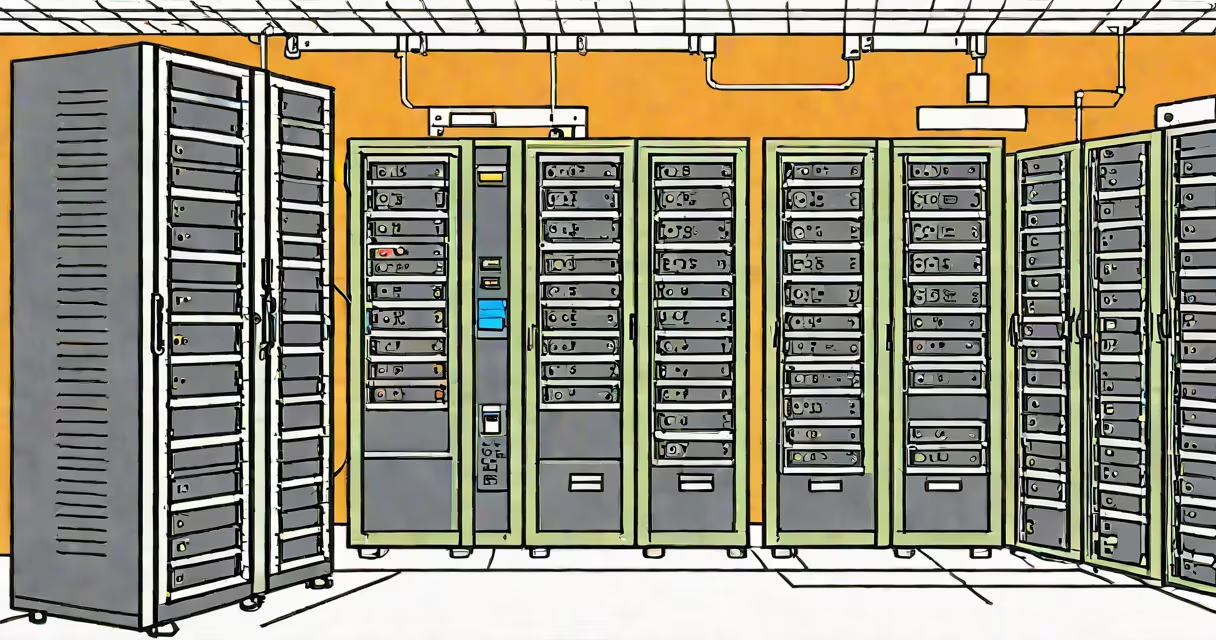
A VMS server is a physical computer that runs software to host multiple virtual machines (VMs), each functioning as an independent computer with its own operating system. This setup allows organizations to maximize hardware resources while maintaining isolation between different workloads.
The VMS server relies on a hypervisor, a layer of software that creates and manages VMs. The hypervisor allocates resources like CPU, memory, and storage from the physical server to each VM. When a user interacts with a VM, the hypervisor ensures the VM operates as if it were a standalone computer, even though it shares resources with other VMs.
For example, a VMS server with 64GB of RAM might allocate 8GB to each of eight VMs, leaving some RAM reserved for the host operating system and the hypervisor itself. This allocation ensures each VM has dedicated resources while preventing one VM from monopolizing the entire server's capacity.
| Type | Hypervisor Type | Use Case |
|---|---|---|
| Type 1 (Bare Metal) | Runs directly on the server hardware | Enterprise environments requiring high performance and security |
| Type 2 (Hosted) | Runs on top of an existing operating system | Development, testing, and small-scale deployments |
Type 1 hypervisors, such as VMware ESXi and Microsoft Hyper-V, are commonly used in enterprise environments because they offer better performance and security. Type 2 hypervisors, like Oracle VirtualBox and VMware Workstation, are often used for development and testing due to their ease of use and compatibility with consumer-grade hardware.
Organizations use VMS servers to consolidate multiple physical servers into a single machine, reducing hardware costs and energy consumption. For example, a company might replace ten physical servers with one VMS server running ten VMs, saving thousands of dollars in hardware and operational expenses.
VMS servers are also used for disaster recovery, allowing organizations to quickly restore services by migrating VMs to backup servers., VMS servers enable sandboxing, where developers test software in isolated environments without affecting production systems.
Unlike traditional servers, which run a single operating system and application, VMS servers host multiple VMs, each running its own operating system and applications. This isolation prevents issues in one VM from affecting others, improving reliability and security.
For instance, if a software bug crashes a VM, the other VMs on the same VMS server remain unaffected. In contrast, a crash on a traditional server would bring down all applications running on that server.
VMS servers also simplify management by centralizing control through tools like VMware vCenter and Microsoft System Center. These tools allow administrators to monitor, update, and secure all VMs from a single interface, reducing the time and effort required to manage multiple servers.
For example, if a VM suddenly consumes excessive CPU resources, administrators can check logs to determine whether the issue stems from a specific application or an external attack. This proactive approach helps prevent downtime and security breaches.
A VMS server is a useful tool for organizations looking to maximize hardware efficiency, improve security, and simplify management. By using virtualization, businesses can reduce costs, improve scalability, and ensure reliable operations.