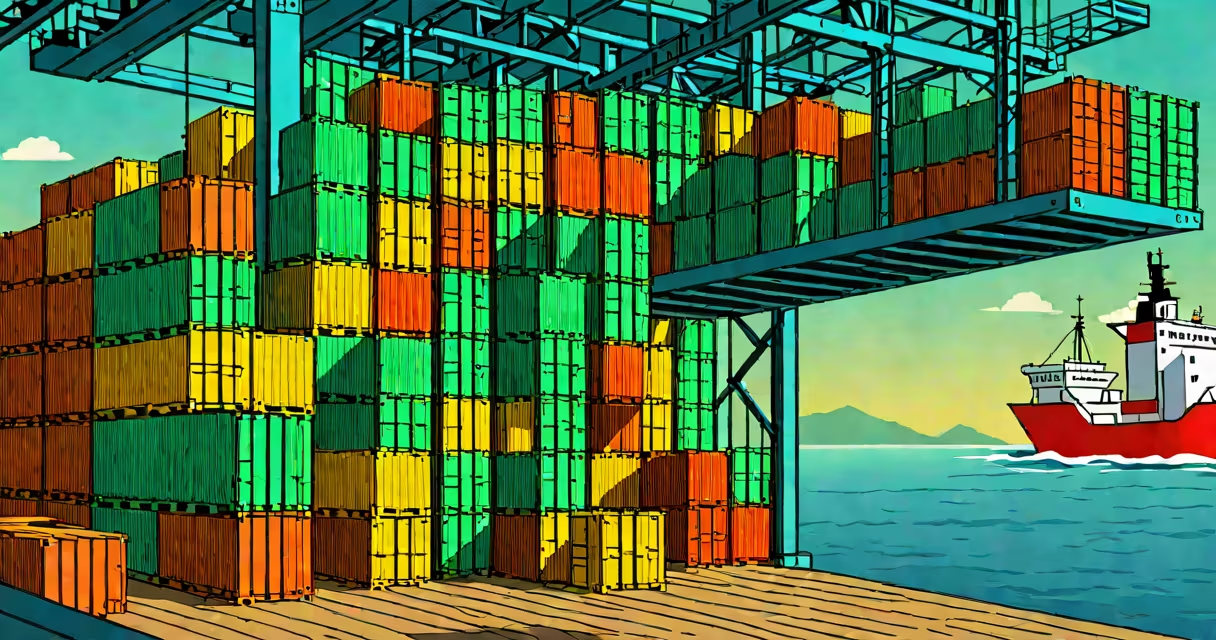
Full container load (FCL) is a shipping method where a single shipper books an entire container for their goods, typically 20-foot or 40-foot units. This contrasts with less-than-container load (LCL), where multiple shippers share space in one container.
When using FCL, the shipper loads their cargo directly into the container at the origin port. The sealed container travels directly to the destination port, where the cargo is unloaded. This direct transfer minimizes handling and reduces risk of damage or loss.
The shipper pays for the entire container regardless of whether they fill it completely. Common container sizes are:
FCL is most economical for shipments of 13-15 cubic meters or more. For smaller volumes, LCL may be cheaper despite longer transit times. A 20-foot container holds about 10 standard pallets, while a 40-foot container fits around 21.
FCL is particularly advantageous for fragile or high-value goods, as the sealed container provides better security. Perishable items also benefit from reduced handling time.
| Factor | FCL | LCL |
|---|---|---|
| Container usage | Exclusive use | Shared space |
| Best for | Large shipments | Small shipments |
| Transit time | td>FasterSlower | |
| Cost | Higher minimum cost | Lower per-unit cost |
| Handling | Minimal | More frequent |
Many assume FCL always costs more than LCL, but this isn't true for larger shipments. For example, shipping 20 cubic meters of goods via FCL might cost $2,000, while LCL could run $2,500 due to multiple handling fees.
Another myth is that FCL requires filling the entire container. Shippers can use partial containers, though they still pay for the full unit.
I once arranged FCL shipping for a client moving machinery components. Despite only filling 70% of a 40-foot container, the cost was still lower than LCL would have been for the same volume.
According to the International Chamber of Shipping, containerized trade accounts for over 60% of seaborne cargo. FCL represents a significant portion of this volume due to its efficiency for large shipments.