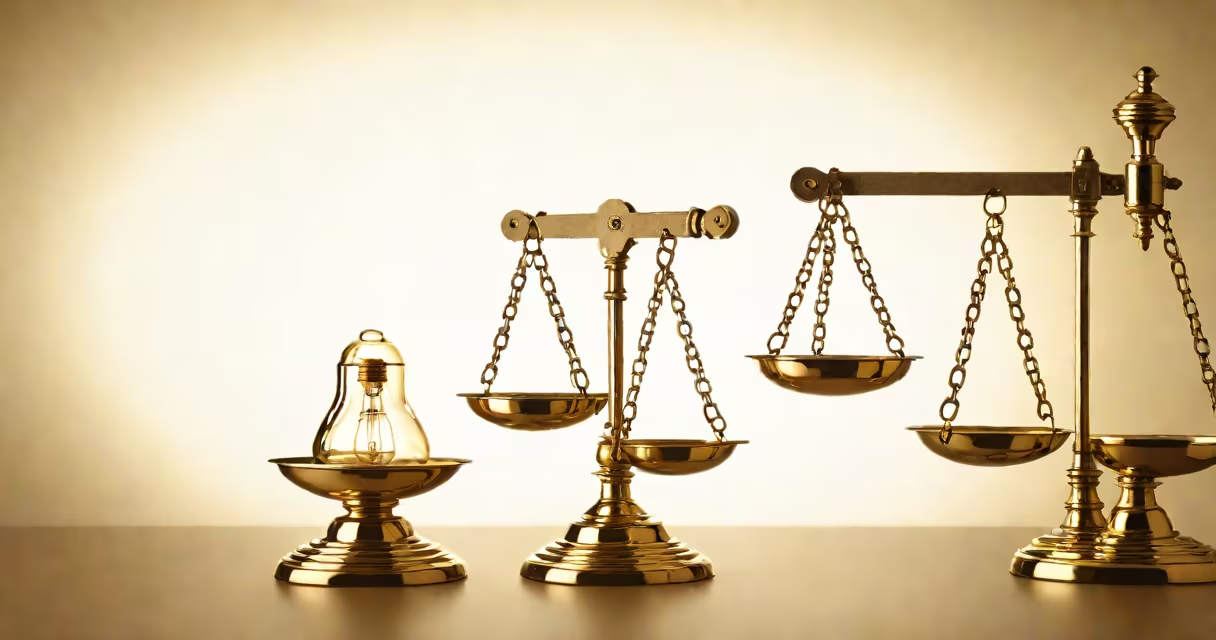
Intellectual property (IP) refers to creations of the mind protected by law, including inventions, literary and artistic works, designs, symbols, names, and images used in commerce. These protections give creators exclusive rights to their work, preventing others from using it without permission.
IP laws grant creators temporary monopolies over their work, encouraging innovation by ensuring they can profit from their ideas. This system balances public interest with individual incentives, allowing society to benefit from new technologies and cultural works while rewarding those who produce them.
| Type | Examples | Duration |
|---|---|---|
| Patents | Machines, processes, chemical formulas, software algorithms | 20 years from filing date |
| Trademarks | Brand names, logos, slogans, distinctive packaging | 10 years (renewable indefinitely) |
| Copyrights | Books, music, films, artwork, computer programs | Life of author + 70 years (varies by country) |
| Trade Secrets | Recipes, business methods, customer lists | As long as kept secret |
Many people confuse patents with copyrights or assume all IP protections last forever. In reality, each type serves different purposes and has specific duration limits. For example, while a patent expires after 20 years, a trademark can last indefinitely if renewed properly.
Another misconception is that IP protection is automatic worldwide. In fact, creators must apply for protection in each country separately, following local laws and procedures. The World Intellectual Property Organization provides a structure for international cooperation, but enforcement remains primarily national.
Coca-Cola's distinctive bottle shape and red-and-white color scheme are classic examples of trade dress protection, a subset of trademark law. These visual elements help consumers identify the product instantly, even without seeing the brand name. Coca-Cola has aggressively defended these elements against copycats, demonstrating how IP protects both innovation and consumer recognition.
For companies, IP represents significant assets that can be licensed, sold, or used to secure funding. According to the U.S. Patent and Trademark Office, IP-intensive industries contribute over $6 trillion annually to the U.S. economy. Protecting these assets allows businesses to maintain competitive advantages and invest in further research and development.
Startups often rely on IP to attract investors. A strong patent portfolio can make a company more valuable, as it demonstrates technical expertise and market potential. However, managing IP requires careful strategy, as overly broad patents may face legal challenges, while too narrow ones might not provide adequate protection.
When I consulted for a tech startup developing medical devices, we spent months refining our patent applications to ensure broad enough coverage to deter competitors while remaining specific enough to withstand legal scrutiny. This process highlighted the delicate balance between innovation and legal protection.
Enforcing IP rights can be complex and expensive. Creators must monitor for infringements and take legal action when necessary. Small businesses and independent artists often lack resources for such battles, creating an uneven playing field. Some countries have weaker IP enforcement systems, making it easier for counterfeiters to operate.
Emerging technologies like artificial intelligence and biotechnology are pushing the boundaries of traditional IP frameworks. Courts and legislators are grappling with questions about whether AI-generated works can be copyrighted or how to protect genetic modifications. These developments will likely lead to new categories of IP or modifications to existing ones.
As globalization continues, international harmonization of IP laws becomes increasingly important. Organizations like the World Trade Organization and regional agreements such as the European Union's IP regulations play important roles in standardizing protections across borders. However, balancing global consistency with local cultural and economic needs remains a challenge.