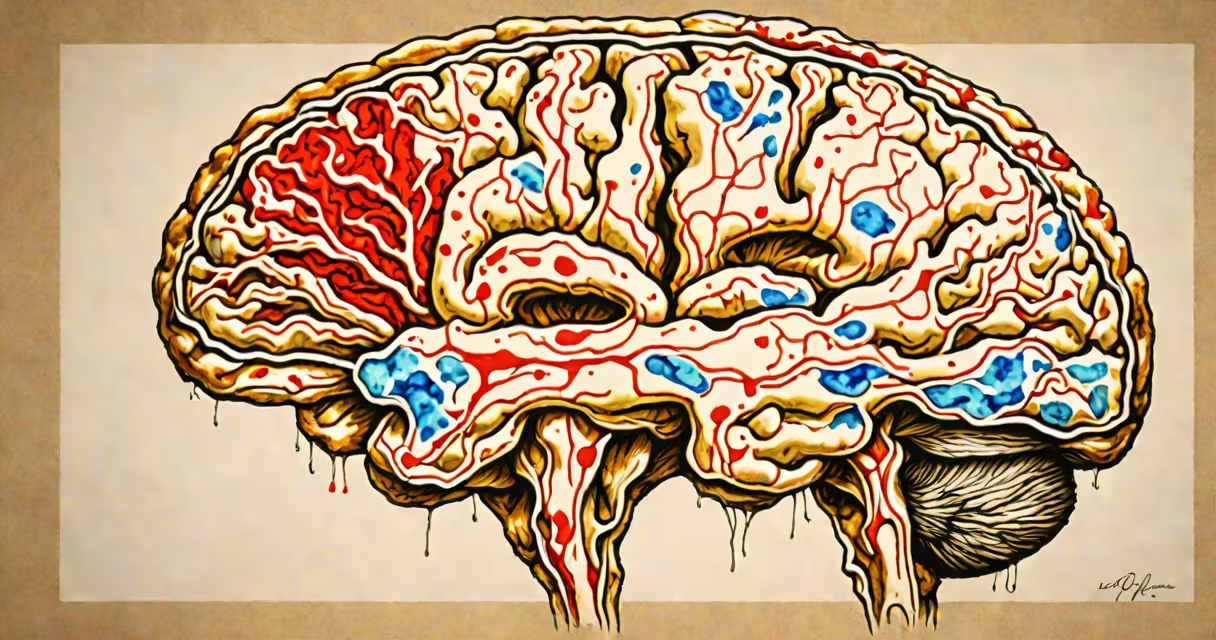
Small vessel ischemia occurs when tiny blood vessels in the brain become blocked or narrowed, causing tiny areas of tissue damage. These micro-infarcts often result from high blood pressure damaging small arteries over time.
Unlike larger strokes that affect major arteries, small vessel ischemia creates pinpoint damage throughout the brain. The process typically involves:
These changes restrict blood flow, depriving brain tissue of oxygen and nutrients.
| Type | Characteristics | Typical Causes |
|---|---|---|
| Lacunar infarcts | Small cavities in brain tissue | High blood pressure |
| White matter hyperintensities | Bright spots on MRI scans | Aging, hypertension |
| Microbleeds | Tiny hemorrhages | Amyloid buildup |
Many people experience no symptoms, earning it the nickname "silent stroke." When symptoms appear, they may include:
These often develop gradually rather than suddenly.
Doctors diagnose small vessel ischemia using MRI scans that reveal characteristic white spots in brain tissue. Treatment focuses on managing risk factors:
According to the American Heart Association, controlling these factors can reduce recurrence risk.
I've seen this condition firsthand while working with stroke patients. Many weren't aware they'd experienced small vessel ischemia until cognitive testing revealed subtle impairments.
People often confuse small vessel ischemia with larger strokes. While both involve reduced blood flow to the brain, small vessel ischemia:
Unlike large strokes, which cause immediate, obvious symptoms.
The National Institute of Neurological Disorders and Stroke recommends these preventive measures:
These lifestyle changes can help prevent the small vessel damage that leads to ischemia.