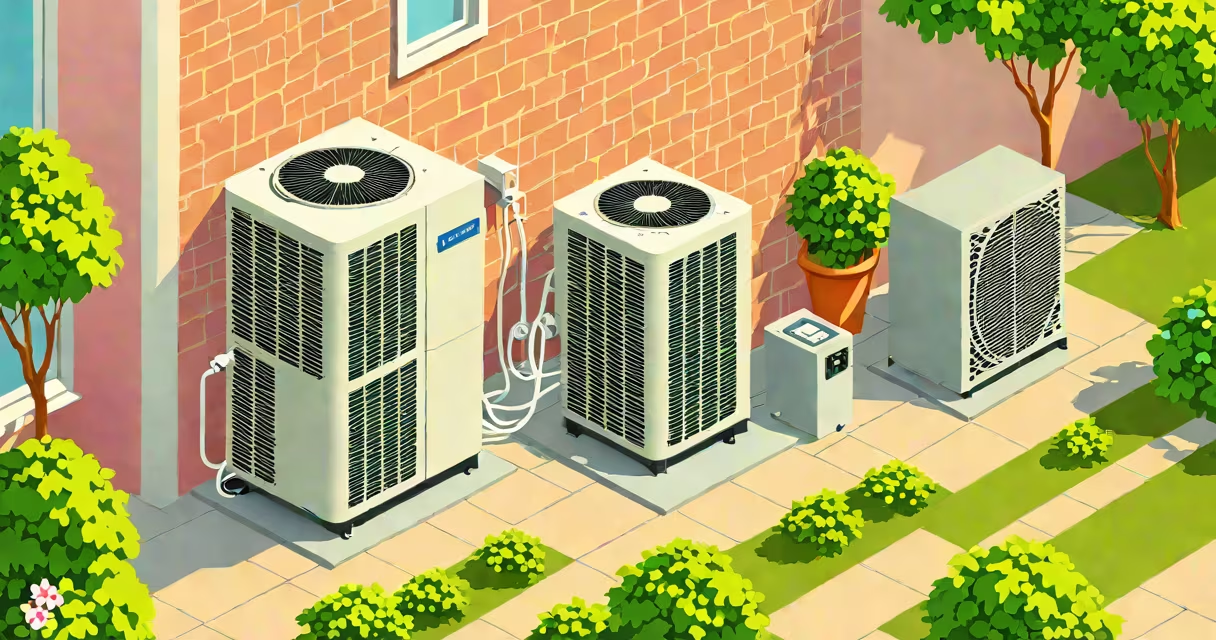
A central air conditioner is a whole-home cooling system that uses ducts to distribute cooled air from a central unit. The best models offer high efficiency, reliability, and low operating costs.
Central air conditioners consist of two main components: an outdoor unit containing a compressor and condenser coil, and an indoor unit with an evaporator coil. Refrigerant circulates between these coils, absorbing heat inside and releasing it outside. A fan blows air over the evaporator coil, cooling it before distributing it through ductwork.
| Type | Efficiency | Best For |
|---|---|---|
| Single-stage | Lower efficiency (SEER 13-16) | Smaller homes, moderate climates |
| Two-stage | Moderate efficiency (SEER 16-20) | Most homes, varying cooling needs |
| Variable-speed (inverter) | Highest efficiency (SEER 20+) | Large homes, hot climates, energy savings |
SEER (Seasonal Energy Efficiency Ratio) measures cooling output over a season divided by energy input. Higher SEER ratings indicate better efficiency.
When selecting a central air conditioner, consider factors like efficiency, size, noise levels, and smart features. Look for ENERGY STAR-certified models for better energy savings. For example, the Carrier Infinity 21 offers a SEER rating of 21 and variable-speed cooling, making it ideal for large homes in hot climates.
Regular maintenance, such as cleaning or replacing filters and scheduling annual professional checkups, ensures the system operates efficiently. If your air conditioner doesn't turn on, check the thermostat settings, circuit breaker, and air filter before calling a technician.
The best central air conditioner depends on your home's size, climate, and cooling needs. Prioritize efficiency, reliability, and proper installation to enjoy consistent comfort and lower energy bills.