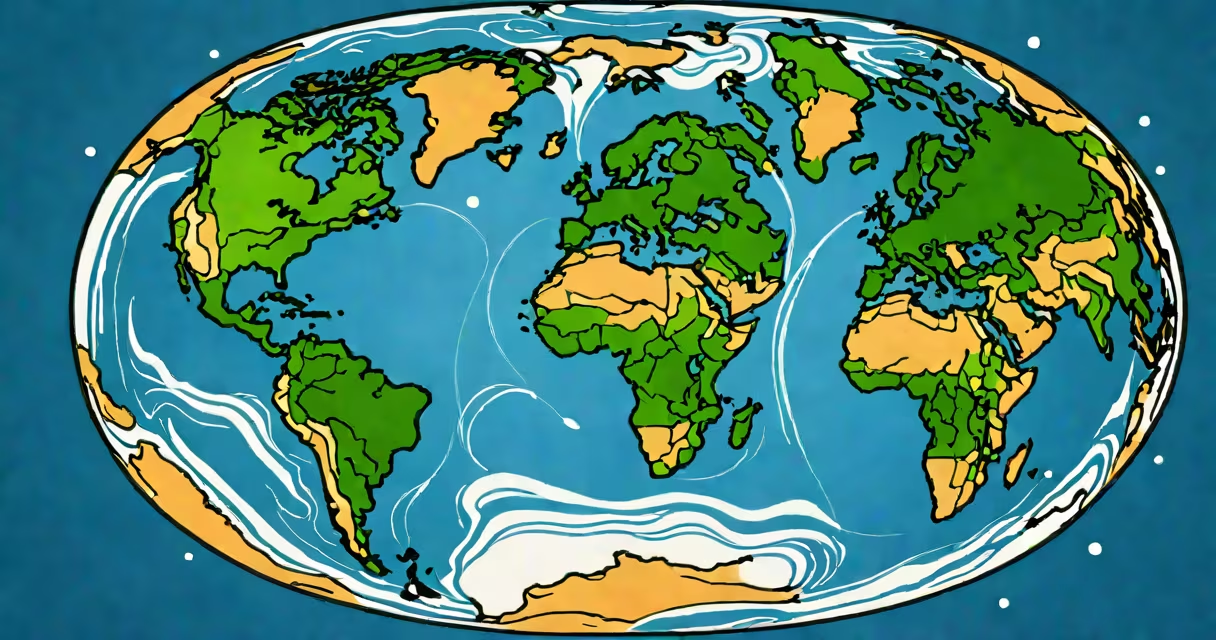
The meaning of Earth refers to both its literal definition as the planet we inhabit and its symbolic representations in culture, science, and language. Earth is the third planet from the Sun and the only known celestial body to support life.
Earth is a terrestrial planet composed primarily of iron, oxygen, silicon, and magnesium. It has a solid surface with large bodies of liquid water, an atmosphere rich in nitrogen and oxygen, and a magnetic field that protects it from solar radiation. Earth's rotation takes about 24 hours, and its orbit around the Sun takes approximately 365 days.
Earth's structure consists of several layers:
These layers interact through processes like plate tectonics, which cause earthquakes, volcanic activity, and the formation of mountain ranges.
Beyond its scientific definition, Earth holds significant cultural and symbolic meanings. In many cultures, Earth represents stability, fertility, and life. For example, in ancient Greek mythology, Gaia was the primordial Earth goddess who gave birth to the Titans. Similarly, in Native American traditions, Earth is often seen as a living entity deserving of respect and care.
One common misconception is confusing "Earth" (the planet) with "earth" (soil). While the planet Earth is a celestial body, earth refers to the soil or ground beneath our feet. This distinction is important in contexts like environmental science and geology.
In English, the word "earth" can function as both a noun and a verb. As a noun, it refers to the planet or the soil. As a verb, it means to bury or inter, as in "earth the cable." Understanding these different uses helps clarify the meaning of Earth in various contexts.