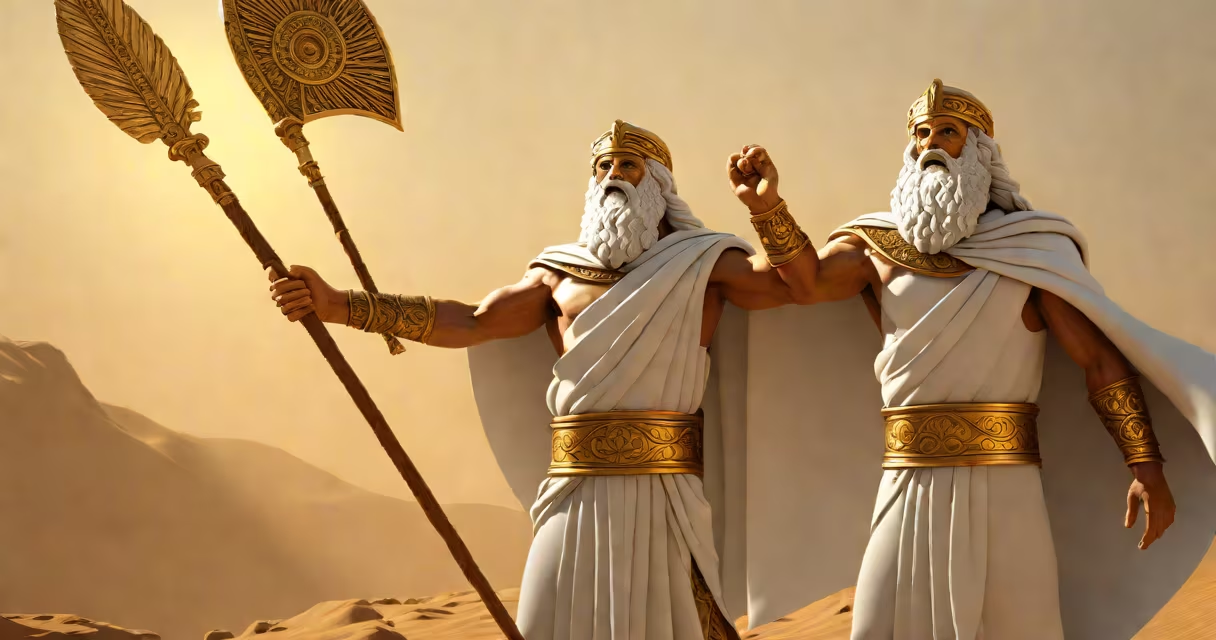
Jehovah Nissi means "The Lord Is My Banner." This name for God appears in Exodus 17:15, where Moses builds an altar after defeating the Amalekites in battle.
The name Jehovah Nissi combines two key elements: "Jehovah" (a form of Yahweh, the personal name of God) and "Nissi" (from the Hebrew word for banner or standard). When Moses raised his hands during the battle, he held a staff-a visual symbol of God's presence and authority. This act served as a rallying point for the Israelites, much like a military banner today.
While Jehovah Nissi is unique, other biblical references describe God as a banner in different contexts:
Jehovah Nissi appears only once in Scripture, but its significance extends beyond Exodus 17. The name emphasizes God's role as Israel's protector in battle. When Moses held his staff high, it symbolized God's active involvement in the fight. This concept is important for understanding God's faithfulness in times of conflict.
Some mistakenly believe Jehovah Nissi refers to a physical banner or flag. However, the name signifies God's presence and protection rather than a literal object., while Jehovah Nissi is often linked to victory in battle, its deeper meaning points to God's ongoing support in all struggles.
When facing challenges, believers can draw strength from Jehovah Nissi. For instance, during a difficult trial, one might pray, "Lord, be my banner," acknowledging God's authority and protection. This aligns with the original context in Exodus, where God fought for His people.
Understanding Jehovah Nissi reminds believers that God is not distant but actively involved in their lives. Just as He fought for Israel, He stands with His people today. This truth provides comfort and confidence in the face of adversity.
For more on the meaning of Jehovah Nissi in Hebrew, see this guide.