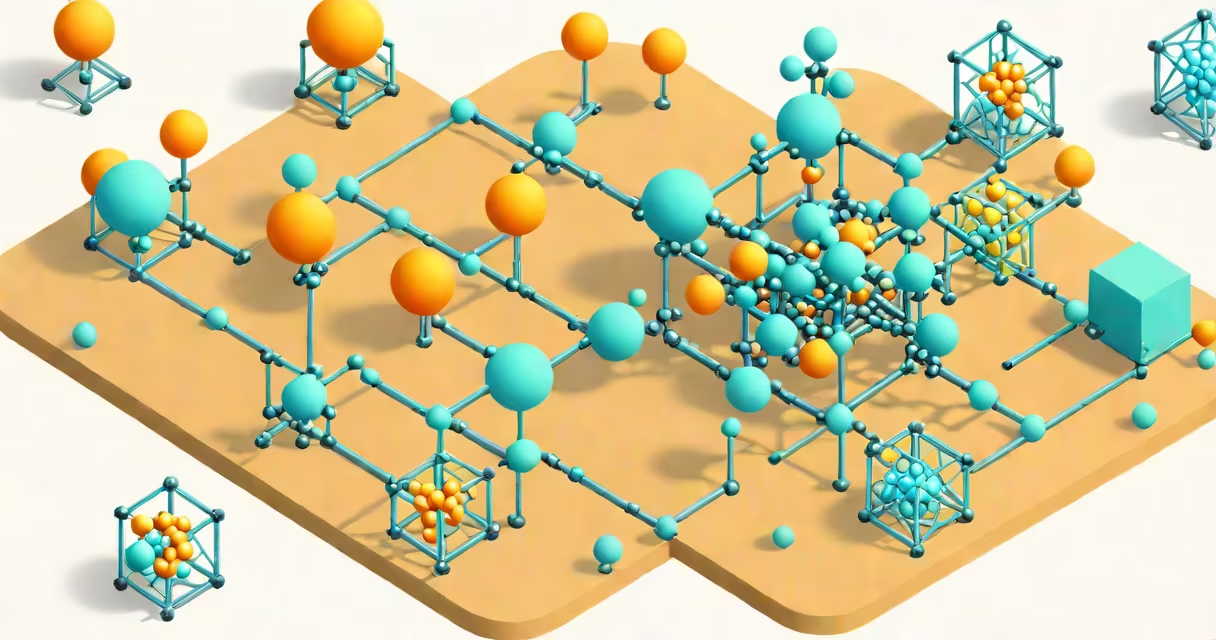
An organic compound is any molecule containing carbon atoms bonded to other carbon atoms or to hydrogen atoms. These compounds form the basis of life as we know it and are essential to biology and materials science.
Carbon's ability to form four covalent bonds allows it to create stable, complex structures. Most organic compounds contain hydrogen, but they may also include oxygen, nitrogen, halogens, or other elements. The diversity of organic compounds arises from carbon's versatility in bonding.
Organic compounds are typically categorized based on their functional groups-specific groups of atoms within molecules that determine the compound's chemical behavior. Common types include:
| Type | Functional Group | Example |
|---|---|---|
| Hydrocarbons | Only carbon and hydrogen | Methane (CH₄) |
| Alcohols | Hydroxyl group (-OH) | Ethanol (C₂H₅OH) |
| Carboxylic Acids | Carboxyl group (-COOH) | Acetic acid (CH₃COOH) |
| Amines | Amino group (-NH₂) | Ammonia (NH₃) - though ammonia is not a volatile organic compound, it contains nitrogen, which is often found in organic compounds. |
Organic compounds are ubiquitous in nature and industry. They form the building blocks of all known life, comprising proteins, DNA, and cell membranes. Industrially, they are used in plastics, fuels, pharmaceuticals, and countless other applications. Their versatility makes them indispensable in both natural and synthetic contexts.
One frequent mistake is assuming all carbon-containing compounds are organic. Carbon monoxide (CO) and carbon dioxide (CO₂), for example, are inorganic because they lack carbon-hydrogen bonds. Another misconception is that organic compounds are always derived from living organisms; many are synthesized in laboratories.
For instance, polyethylene, a common plastic, is an organic polymer produced through industrial processes. Its molecular structure consists of long chains of carbon atoms bonded to hydrogen atoms, exemplifying a synthetic organic compound.
Not all organic compounds are volatile. While many hydrocarbons evaporate easily, some, like certain polymers, are solid at room temperature. This variability is due to differences in molecular weight and bonding structures.