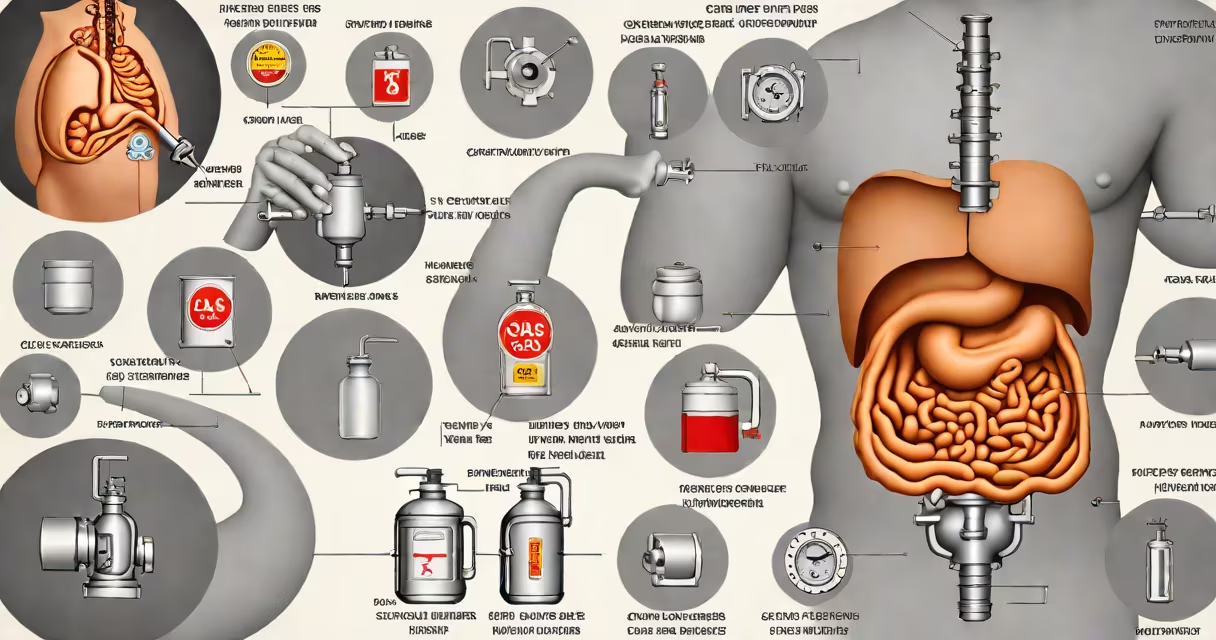
Gas pains typically occur in the abdomen, often centered around the lower belly or both sides near the intestines. These cramps happen when gas gets trapped in the digestive tract, causing pressure and discomfort.
Gas builds up in your intestines when your body can't digest certain foods completely. This undigested food is broken down by bacteria, producing gas as a byproduct. When gas accumulates, it stretches the intestinal walls, triggering pain signals.
While gas pains can occur anywhere in the abdomen, they're most commonly felt in these areas:
| Location | Common Causes |
|---|---|
| Lower abdomen | Trapped gas from incomplete digestion, often after eating high-fiber foods |
| Left side | Gas buildup in the descending colon, common after consuming beans or carbonated drinks |
| Right side | Gas in the ascending colon, sometimes mistaken for appendicitis |
| Upper abdomen | Swallowed air from eating too quickly or chewing gum |
Many people assume gas pains only affect the stomach area. However, gas can also travel to the chest, causing sharp pains that mimic heartburn. This happens when gas presses against the diaphragm, creating discomfort in the upper chest.
I once experienced this after a large meal with carbonated beverages. The pain radiated to my chest, making me worry briefly before realizing it was just gas. Passing the gas or lying down usually relieves the pressure.