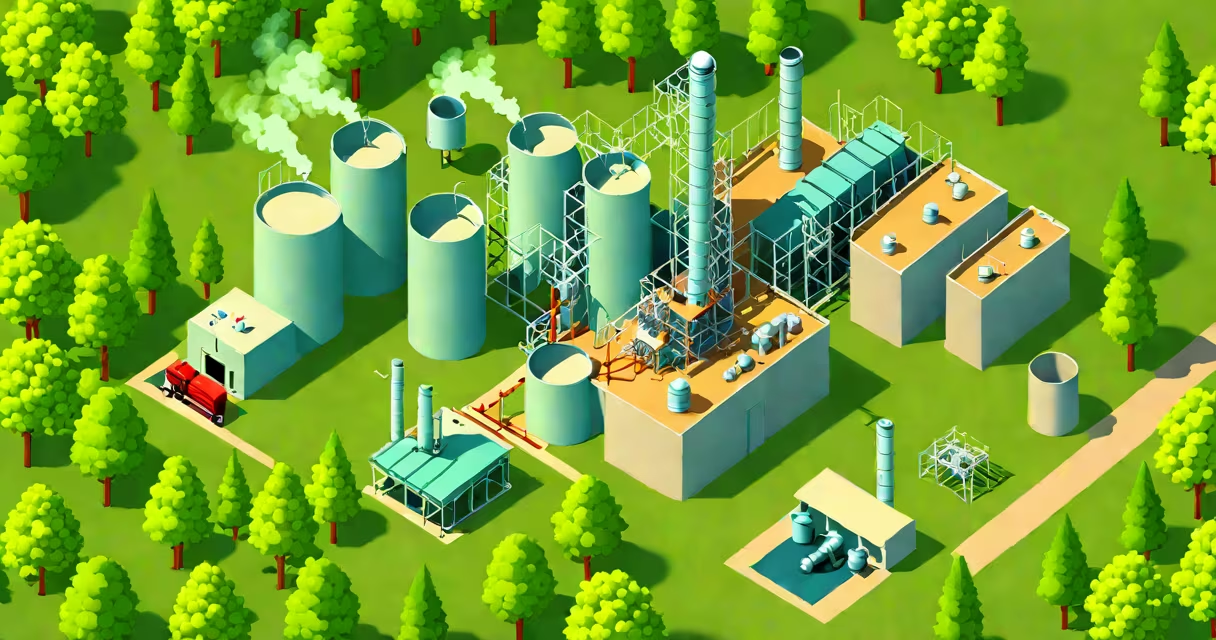
Biomass energy is produced from organic materials like wood, agricultural crops, and waste from plants or animals. These sources are typically found in forests, farms, landfills, and wastewater treatment plants.
Biomass energy is generated through biological processes or by burning organic materials. When biomass is burned, it releases heat energy, which can be used to generate electricity or produce steam for industrial processes. Alternatively, biomass can be converted into biogas through anaerobic digestion, a process where microorganisms break down organic matter in the absence of oxygen.
The primary sources of biomass energy include:
Biomass energy is utilized in various settings, including:
One common misconception is that biomass energy is always carbon-neutral. While biomass can be renewable, the carbon emissions from burning it can still contribute to air pollution if not managed properly., some people believe that all organic waste can be used for biomass energy, but certain materials may not be suitable due to contaminants or low energy content.
Biomass energy is a versatile and renewable energy source found in various organic materials and locations. By understanding its sources and applications, we can better use this sustainable energy option to reduce reliance on fossil fuels and promote environmental sustainability.