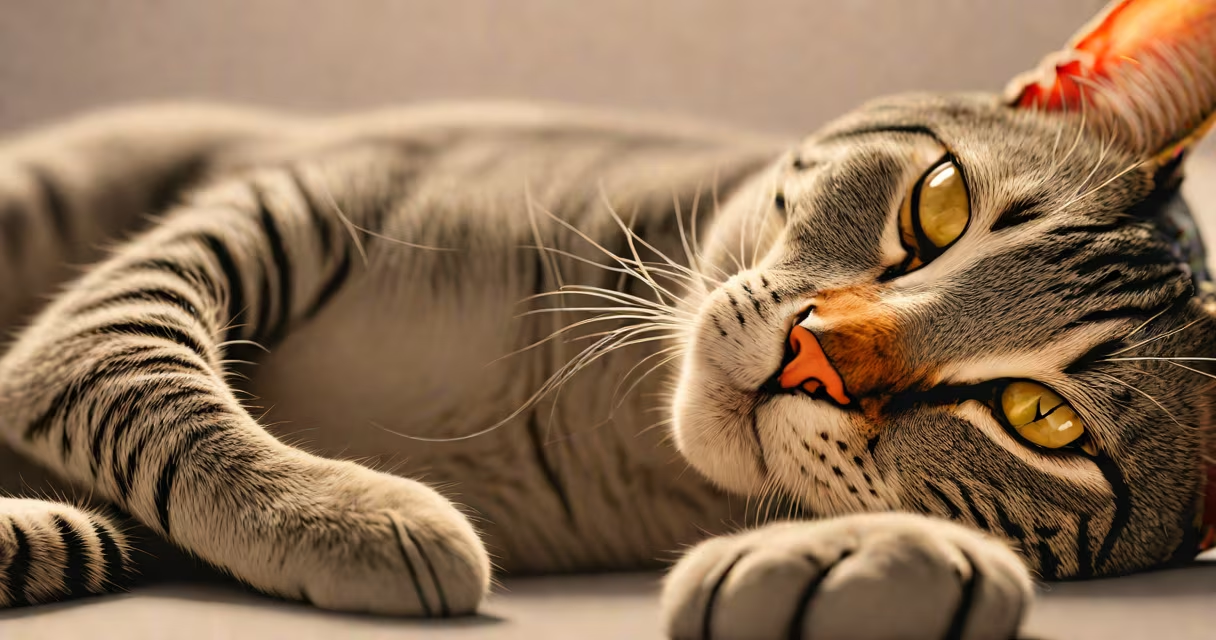
Cats lay on your chest because it provides warmth, security, and close contact with their favorite human. This behavior stems from instinctual comfort-seeking and social bonding.
When a cat lies on your chest, they're engaging in a behavior called "affiliative social interaction." This means they're seeking closeness to reinforce their bond with you. The rhythmic sound of your heartbeat and the rise and fall of your chest mimic the comforting sensations they experienced as kittens with their mother.
| Behavior | Description |
|---|---|
| Curled up | The cat forms a compact circle, conserving body heat and protecting important organs. |
| Stretched out | The cat lies fully extended, showing trust and relaxation. |
| Kneading | The cat pushes in and out with their paws, a throwback to kittenhood when they kneaded their mother's belly to stimulate milk flow. |
Cats typically choose soft, warm surfaces for resting, and your chest offers both. The proximity to your face also allows them to monitor your expressions and breathing patterns. According to animal behaviorist Dr. Sarah Ellis, "This behavior shows that your cat considers you a safe and trusted companion."
Many people assume cats lay on chests simply because they're comfortable. While comfort is part of it, the behavior is primarily about bonding. Contrary to popular belief, cats don't lay on chests to claim territory or assert dominance. They're seeking connection, not control.
Another misconception is that cats only lay on chests when they're sick or cold. While illness or temperature can play a role, healthy cats also engage in this behavior regularly to strengthen their social bonds.
I noticed my own cat, Whiskers, would lay on my chest more frequently when I was stressed. The gentle pressure and warmth seemed to calm me, and her presence provided a sense of security. This aligns with research showing that interacting with pets can lower cortisol levels and reduce stress.
Understanding why cats lay on your chest reveals a lot about their social nature and their deep connection to their human companions. This behavior is a sign of trust, affection, and a desire for closeness. By recognizing and appreciating these moments, you can strengthen your bond with your feline friend.