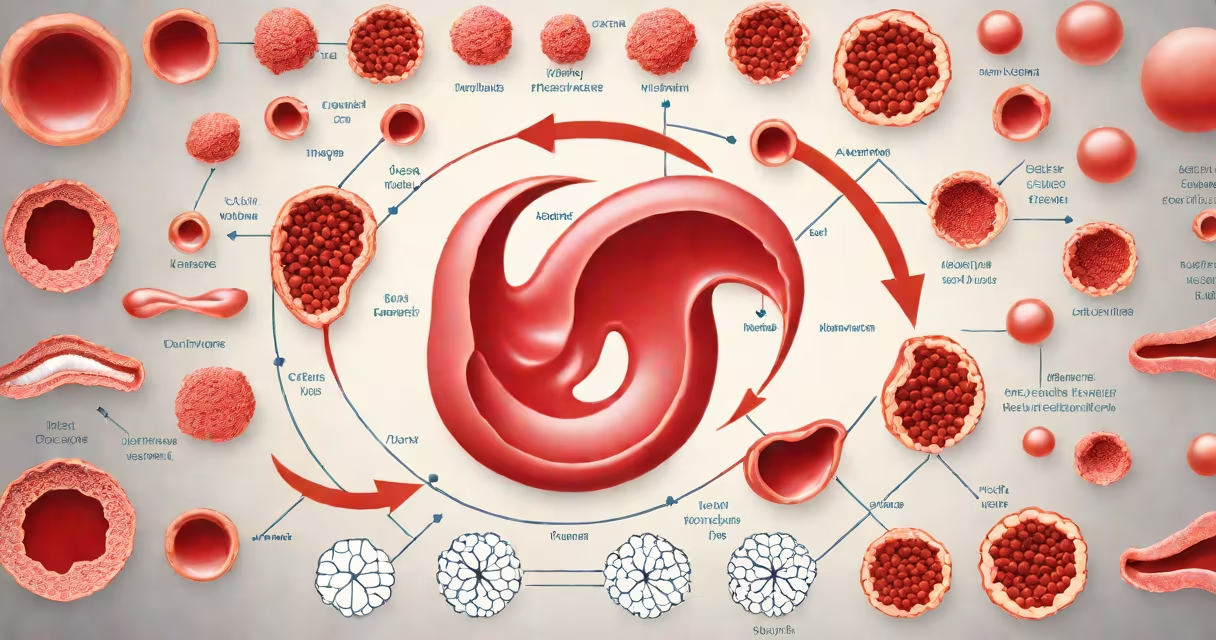
Menstrual clotting happens when your flow slows enough for blood to coagulate, forming jelly-like clots. This typically occurs during heavy periods when the uterus sheds its lining.
During menstruation, your body releases anticoagulants to keep blood flowing smoothly. However, if your flow is particularly heavy, these natural thinners can't keep up, allowing clots to form. The process mirrors how blood clots during injury to prevent excessive bleeding.
Clots often appear during the heaviest days of your period, usually days 2-3. They may look like thick, dark red jelly or tissue-like fragments. Most clots pass painlessly, though larger ones might cause mild cramping.
| Type | Appearance | Typical Size |
|---|---|---|
| Jelly-like clots | Dark red, gel-like | Quarter-sized |
| Tissue-like clots | Grayish, stringy | Half-dollar sized |
| Large clots | Bright red, firm | Golf ball sized or larger |
Most clots fall between the first two categories. As jelly-like clots suggest normal shedding, large clots may indicate heavier-than-average bleeding.
Several factors contribute to clotting during menstruation:
I noticed more clotting after switching birth control methods. My doctor explained that hormonal changes can temporarily disrupt the balance between anticoagulants and clotting factors, leading to temporary clotting during adjustment periods.
While occasional clotting is normal, consult a healthcare provider if you experience:
The American College of Obstetricians and Gynecologists recommends tracking your menstrual cycle to identify patterns and discuss concerns with your provider. Persistent heavy bleeding with clots may indicate conditions like fibroids or endometriosis requiring treatment.
Many people confuse normal clotting with signs of serious health issues. While clots can occur during pregnancy or indicate miscarriage, they don't always signal problems. The Mayo Clinic notes that occasional clotting is common and not typically cause for concern unless accompanied by other symptoms.
Another myth suggests that clots always indicate excessive blood loss. In reality, clots form when blood flow slows, allowing coagulation. You might pass several small clots during a moderate flow day without significant blood loss.